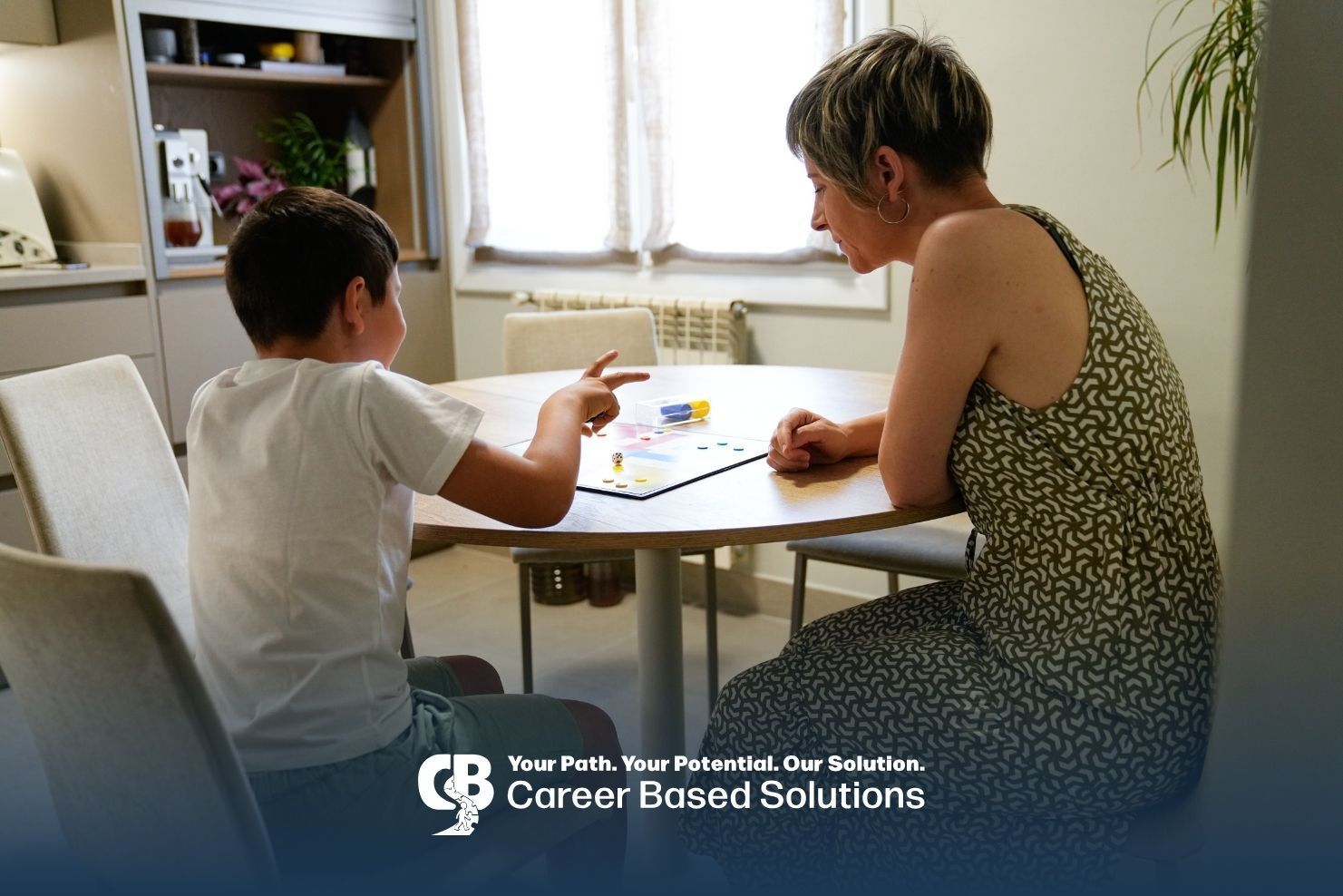
The behavior technician works under the supervision of a Board Certified Behavior Analyst (BCBA), who designs the treatment plan. The technician does not write the plan or set the long-term goals. Instead, the technician carries the plan into daily practice, working face to face with the client and recording how each session unfolds.
You may also hear behavior technicians referred to as RBTs, ABA therapists, or behavior interventionists. The titles vary by organization, but the core function is consistent: deliver therapy directly, collect data, and support the goals set by the supervising analyst.
The Core Responsibilities of a Behavior Technician
The day-to-day work of a behavior technician is structured but flexible. Each session is built around the client's individual treatment plan, yet a skilled technician adapts moment to moment based on how the child responds.
Implementing the Treatment Plan
The central responsibility of a behavior technician is to carry out the programs written by the BCBA. This means running specific teaching procedures, prompting and reinforcing target skills, and following the plan with consistency so that progress can be measured accurately. In our sessions, we have seen that consistency from one technician to the next is often what allows a new skill to take hold.
Collecting Data During Every Session
ABA is a data-driven approach, and the behavior technician is the person gathering that data in real time. Technicians record how often a behavior occurs, how a child responds to a prompt, and whether a skill is improving. This information goes back to the BCBA, who uses it to decide whether to keep a program as is or adjust it. Without accurate data from the technician, the whole treatment plan would be guesswork.
Teaching Skills Through Structured and Natural Methods
Behavior technicians
teach a wide range of skills, from communication and social interaction to daily living routines like dressing, brushing teeth, or following a morning schedule. Some teaching happens in structured formats at a table, and some happens naturally through play and everyday activities. A good technician knows how to weave learning into a game so that the child stays motivated and engaged.
Supporting Positive Behavior
When challenging behavior occurs, the behavior technician responds using the strategies outlined in the treatment plan. The goal is never punishment. Instead, technicians work to understand what a behavior is communicating and to teach a more helpful skill in its place. We often remind families that behavior is a form of communication, and a large part of the technician's job is helping a child find a clearer way to express a need.
How Behavior Technicians Work Alongside the BCBA
The relationship between a behavior technician and a BCBA is at the heart of quality ABA therapy. The BCBA assesses the client, writes the treatment plan, and sets measurable goals. The behavior technician then delivers that plan and reports back on what is working.
Supervision is built into the model. A
BCBA
regularly observes sessions, reviews the data, and coaches the technician on technique. If a program is not producing progress, the analyst revises it and the technician adjusts accordingly. This loop of delivery, data, and review is what keeps therapy responsive to each child's needs rather than locked into a fixed script.
For families, this structure offers reassurance: your child is not being supported by one person working in isolation. They are supported by a team, with the technician providing hands-on care and the analyst providing clinical oversight.
The Behavior Technician's Role in Different Settings
One of the strengths of ABA is that it can travel with a child into the environments where skills are actually needed. Behavior technicians work across several settings, and the role shifts slightly in each.
In the Home
In a home environment, the behavior technician helps a child practice skills where they live and play. Sessions might focus on family routines, sibling interaction, mealtime, or bedtime. In-home ABA therapy
lets the technician address the exact situations that matter to a family, and it gives parents the chance to observe and learn alongside the session.
In a Clinic
A clinic setting offers a structured, distraction-controlled space with materials designed for learning. Working in our ABA therapy clinic, a behavior technician can run focused teaching sessions and give a child supervised opportunities to interact with peers. The predictability of a clinic often helps children build new skills before generalizing them to busier environments.
In School
Skills learned in therapy are only useful if they carry into the classroom. Through school-based ABA therapy, a behavior technician can support a student during the school day, helping with attention, transitions, and social interaction. This setting also calls for close collaboration with teachers and school personnel, who are an important part of a child's progress.
For very young children, early support can make a meaningful difference, which is why early intervention ABA therapy
places a trained technician with a child during the years when learning develops most rapidly. Families across Virginia often combine settings, with a child receiving home, clinic, or school support depending on their goals and schedule.
Training and Qualifications Behind the Role
Becoming a behavior technician requires real preparation, not simply an interest in helping children. The Registered Behavior Technician credential typically requires completing a
40-hour training program
covering ABA principles, ethics, and professional conduct, passing a competency assessment conducted by a qualified supervisor, and passing the RBT examination administered through the BACB.
Once certified, RBTs are expected to follow an ethics code and to work under ongoing supervision. They also complete renewal requirements to keep their credential current. Requirements can change over time, so families and aspiring technicians should always confirm the latest standards directly with the BACB.
Beyond the formal credential, strong behavior technicians share qualities that are harder to certify: patience, warmth, reliability, and the ability to stay calm and consistent. In our experience, the technicians who connect best with children are the ones who treat every small success as worth celebrating.
Why the Behavior Technician Relationship Matters for Your Child
Because behavior technicians spend more direct time with a child than anyone else on the team, the relationship they build carries real weight. Trust and rapport are not extras in ABA. They are the foundation that makes learning possible.
We have seen children who were hesitant in early sessions gradually relax once a consistent, caring technician became a familiar part of their week. When a child feels safe, they are more willing to try new things, tolerate challenges, and stay engaged. That emotional groundwork often drives the progress that later shows up in the data.
Consistency matters too. When the same technician, or a small and well-coordinated team, works with a child over time, the child experiences fewer disruptions and clearer expectations. This is one reason quality providers invest in training and retaining their technicians rather than treating the role as interchangeable.
How Families Can Partner With Their Child's Behavior Technician
Parents and caregivers are not bystanders in ABA therapy. The most meaningful progress tends to happen when families and technicians work as a team. You know your child's history, preferences, and triggers better than anyone, and sharing that knowledge helps a technician tailor each session.
Parent training
is one of the best ways to strengthen this partnership. When parents learn the same strategies a technician uses, those strategies continue after the session ends, which helps skills generalize into everyday life. Simple steps, such as asking the technician what was worked on that day or how you can reinforce a skill at home, extend the value of every session. During school breaks, a summer ABA therapy program
can keep that momentum going and prevent the loss of hard-won skills.
Conclusion
A behavior technician is the hands-on heart of ABA therapy. They take a treatment plan designed by a BCBA and turn it into real learning: teaching skills, collecting the data that guides decisions, supporting positive behavior, and building the trusting relationship that makes progress possible. They work across homes, clinics, and schools, always under the supervision of a certified analyst and always in service of a child's individual goals.
For parents weighing ABA therapy, understanding this role makes the process less mysterious. Your child will be supported by a trained professional who is part of a larger, accountable team. For educators, individuals on the spectrum, and those considering the field themselves, the behavior technician role is a reminder that meaningful change in ABA happens one patient, well-supported session at a time.
Work With a Trusted ABA Team
Career Based Solutions
provides compassionate, individualized ABA therapy delivered by trained behavior technicians and overseen by experienced clinical staff. We proudly serve families in
Thornburg,
Locust Grove, and
King George, offering in-home, clinic, and school-based support tailored to each child.
Ready to learn how a behavior technician can support your child's growth?
Contact us today
to schedule a consultation and take the next step.
Interested in becoming a behavior technician yourself? We're always glad to hear from BCBAs, RBTs, and clinical and administrative staff who share our commitment to compassionate, individualized care. Explore our
open positions
to learn more about joining the team.
Frequently Asked Questions