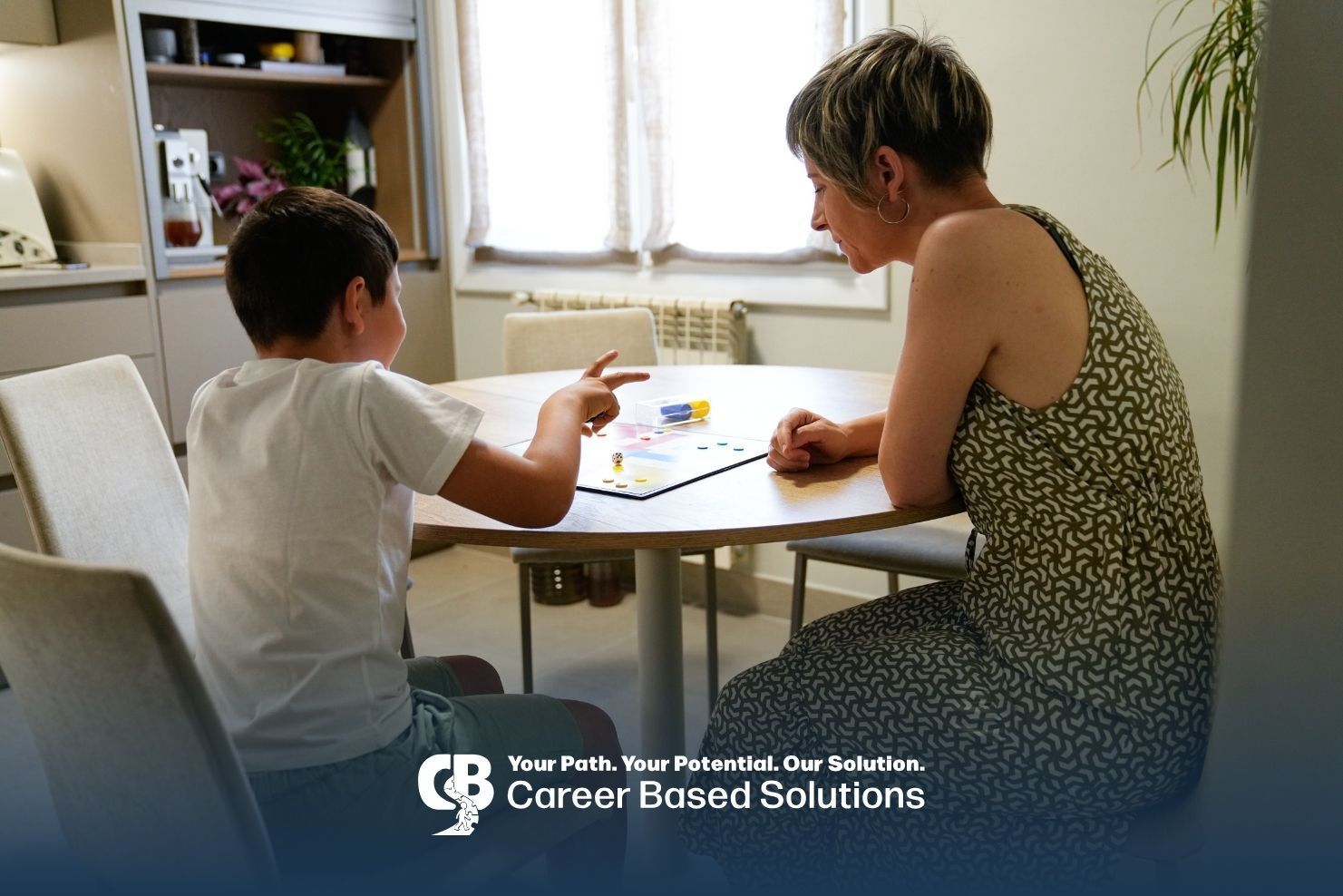
What Is Home-Based ABA Therapy? A Complete Guide for Virginia Families
Understanding Home-Based ABA Therapy
Applied Behavior Analysis, usually shortened to ABA, is a well-established, evidence-based approach for supporting autistic children and others with developmental differences. It focuses on understanding how behavior works, how learning happens, and how a child's environment can be shaped to help them build meaningful skills. Home-based ABA therapy simply means that this support is delivered where a child spends much of their daily life: at home.
Instead of traveling to a center, families welcome a trained therapist into the home, where therapy is woven into familiar routines, favorite toys, and everyday spaces. Our in-home ABA therapy programs are built around the idea that children often learn best in the places where they will actually use their new skills. A goal like asking for a snack, getting dressed, or playing alongside a sibling becomes far easier to teach when the teaching happens in the kitchen, the bedroom, or the living room rather than an unfamiliar clinic room.
Home-based ABA is highly individualized. No two programs look the same, because no two children have the same strengths, interests, or goals. What stays consistent is the focus on practical, functional skills that improve a child's daily life and help the whole family feel more confident and connected.
How Home-Based ABA Therapy Works
Every quality home-based program begins with a Board Certified Behavior Analyst (BCBA). The BCBA completes a thorough assessment of your child's current skills, communication style, and any behaviors that may be getting in the way of learning or daily routines. From there, they build an individualized treatment plan with specific, measurable goals tailored to your child and your family's priorities.
Day-to-day therapy is typically carried out by a Registered Behavior Technician (RBT), who works directly with your child under the BCBA's ongoing supervision. Throughout each session, the therapist collects data on how your child is responding. That information allows the team to see what is working, adjust strategies when needed, and recognize real progress over time.
What a Typical In-Home Session Looks Like
A home-based session usually blends structured teaching with natural, play-based learning. Some skills are taught in short, focused steps, while others are practiced during everyday moments like snack time, getting ready in the morning, or a game on the floor. Reinforcement, which means responding to a desired behavior in a way that makes it more likely to happen again, is used consistently to keep learning motivating and positive.
In our sessions, we often weave goals directly into what a child already enjoys. If a child loves trains, the therapist might use that interest to practice requesting, turn-taking, or following directions. This naturalistic approach keeps children engaged and helps new skills feel relevant rather than forced.
The Team Behind In-Home ABA
Home-based ABA is a team effort. The BCBA designs and oversees the program, the RBT delivers the day-to-day teaching, and parents and caregivers play an active role throughout. Because therapy happens at home, families have a front-row seat to the strategies being used, which makes it easier to carry skills forward long after a session ends.
The Benefits of Receiving ABA Therapy at Home
Choosing the right setting for therapy is an important decision, and the home environment offers several distinct advantages for many children and families.
Learning Skills Where They Are Used
One of the biggest challenges in any kind of therapy is generalization, which is the ability to use a skill across different settings, people, and situations.
When skills are taught in the same environment where they will be used, generalization often comes more naturally. A child who learns to brush their teeth in their own bathroom, or to ask for help at their own kitchen table, is practicing in the exact context where the skill matters most.
These home-based foundations also tend to support a child's success elsewhere over time. As skills become more solid, many families look to extend that progress into the classroom, and coordinated school-based ABA therapy can help bridge what a child is learning at home with the demands of the school day.
Stronger Family Involvement and Parent Training
Because therapy takes place in the home, parents and siblings are naturally part of the process. This closeness creates a powerful opportunity for parent training, where caregivers learn the same evidence-based strategies the therapy team uses. When everyone in the home responds to challenges in a consistent way, children tend to make progress faster, and families feel less overwhelmed.
In our experience, parents who feel equipped with practical tools often notice meaningful changes in daily routines, from smoother transitions to calmer mornings. The goal is never to add more to a parent's plate, but to give families realistic strategies that fit into the life they already live.
A Comfortable, Low-Stress Environment
For many autistic children, new environments can feel overwhelming. Bright lights, unfamiliar sounds, and unpredictable spaces can make it harder to focus and learn. Home removes much of that uncertainty. A child who feels safe and regulated is far more available for learning, and the comfort of a familiar space can make therapy feel less like an appointment and more like a natural part of the day.
Home-Based vs. Clinic-Based ABA Therapy
Families often ask whether
home-based or center-based therapy is the better choice, and the honest answer is that it depends on the child and their goals. Each setting has real strengths.
Home-based ABA shines when goals are tied to daily routines, when family involvement is a priority, or when a child learns best in a familiar, low-stress space. Clinic-based therapy, on the other hand, offers a structured environment with dedicated learning spaces, fewer household distractions, and built-in opportunities to practice social skills alongside peers. Our ABA therapy clinic provides exactly that kind of setting for families who benefit from a more structured space or regular peer interaction.
Many children do well with a combination of both. A child might build core communication and daily living skills at home while also attending clinic sessions to practice playing and sharing with other children. There is no single right answer, and a good provider will help you weigh the options based on your child's needs rather than a one-size-fits-all model.
Is Home-Based ABA Therapy Right for Your Child?
Home-based ABA can be a strong fit for a wide range of children and families. It is often especially valuable for very young children, where early intervention ABA therapy can make a meaningful difference during a critical window of development. The earlier a child receives support, the more opportunity there is to build foundational communication, social, and daily living skills.
Home-based therapy also tends to suit families who want to be closely involved, children whose goals center on home and community routines, and children who find transitions to unfamiliar environments difficult. Consistency matters too. For families who want to maintain momentum when school is out, a structured summer ABA therapy program can help children hold on to their progress and keep building skills during the break.
Of course, every family is different. The best way to know whether home-based ABA is the right path is to talk with a qualified BCBA who can assess your child and walk you through the options.
Getting Started With Home-Based ABA Therapy
Beginning therapy can feel daunting, but the process is usually more straightforward than parents expect. It typically starts with a diagnostic evaluation of autism, if your child does not already have one, followed by an assessment from a BCBA. The BCBA then develops a treatment plan, and your family works with the provider to set up a schedule that fits your life.
Coverage is a common concern, and there is good news for families across Virginia. State law requires many insurance plans to cover medically necessary ABA therapy, and Virginia Medicaid also covers ABA for eligible children. Because every plan is different, it is always wise to verify your specific benefits, but cost should not automatically be a barrier to getting your child the support they need.
What to Expect During the Initial Assessment
During the assessment, the BCBA spends time getting to know your child and your family. This often includes interviews about your child's history and routines, direct observation, and a review of any existing reports or evaluations. The aim is to understand your child as a whole person, not just a list of behaviors, so that the resulting plan reflects their genuine strengths, needs, and the goals that matter most to your family.
Conclusion
Home-based ABA therapy brings evidence-based support directly into the place where children live, play, and grow. By teaching skills in real-world routines, involving the whole family, and meeting children in a comfortable and familiar environment, this approach helps autistic children build practical skills that carry over into everyday life. Whether used on its own or alongside clinic or school-based services, home-based ABA gives families a flexible, personalized way to support their child's development. If you have been wondering whether it could be the right fit, learning more is a simple and pressure-free first step.
Ready to Explore Home-Based ABA Therapy?
If you would like to learn whether home-based ABA therapy in Virginia is right for your child, Career Based Solutions is here to help. We proudly provide in-home ABA services to families in Spotsylvania, Stafford, and Fredericksburg, and we would be glad to answer your questions and walk you through the next steps.
Contact us today to schedule a consultation and take the first step toward personalized support for your child.
Frequently Asked Questions
What is home-based ABA therapy?
Home-based ABA therapy is Applied Behavior Analysis delivered in a child's home rather than a clinic or center. A trained therapist works with the child in their everyday environment, teaching communication, social, and daily living skills within familiar routines. This setting supports natural learning and makes it easy for parents and caregivers to be involved.
How many hours of in-home ABA therapy does a child need?
The number of hours depends on each child's individual needs and goals, as determined by a BCBA assessment. Focused programs that target a few specific skills generally involve fewer weekly hours, while comprehensive programs addressing many developmental areas tend to involve more intensive support. Your BCBA will recommend a schedule based on your child's assessment and adjust it as your child progresses.
Is home-based ABA therapy covered by insurance in Virginia?
In many cases, yes. Virginia law requires numerous insurance plans to cover medically necessary ABA therapy, and Virginia Medicaid covers ABA for eligible children. Because coverage details vary by plan, it is best to confirm your specific benefits with your insurer or ask your ABA provider for help verifying coverage before starting services.
SOURCES:
https://www.cdc.gov/autism/
https://www.nimh.nih.gov/health/topics/autism-spectrum-disorders-asd
https://www.bacb.com/
https://casproviders.org/
https://www.healthychildren.org/
https://autisticadvocacy.org/
https://dbhds.virginia.gov/
https://www.dmas.virginia.gov/

Let's Help Your Child Shine
Personalized ABA therapy built around your child's unique strengths and goals. Serving families in Fredericksburg & surrounding areas.