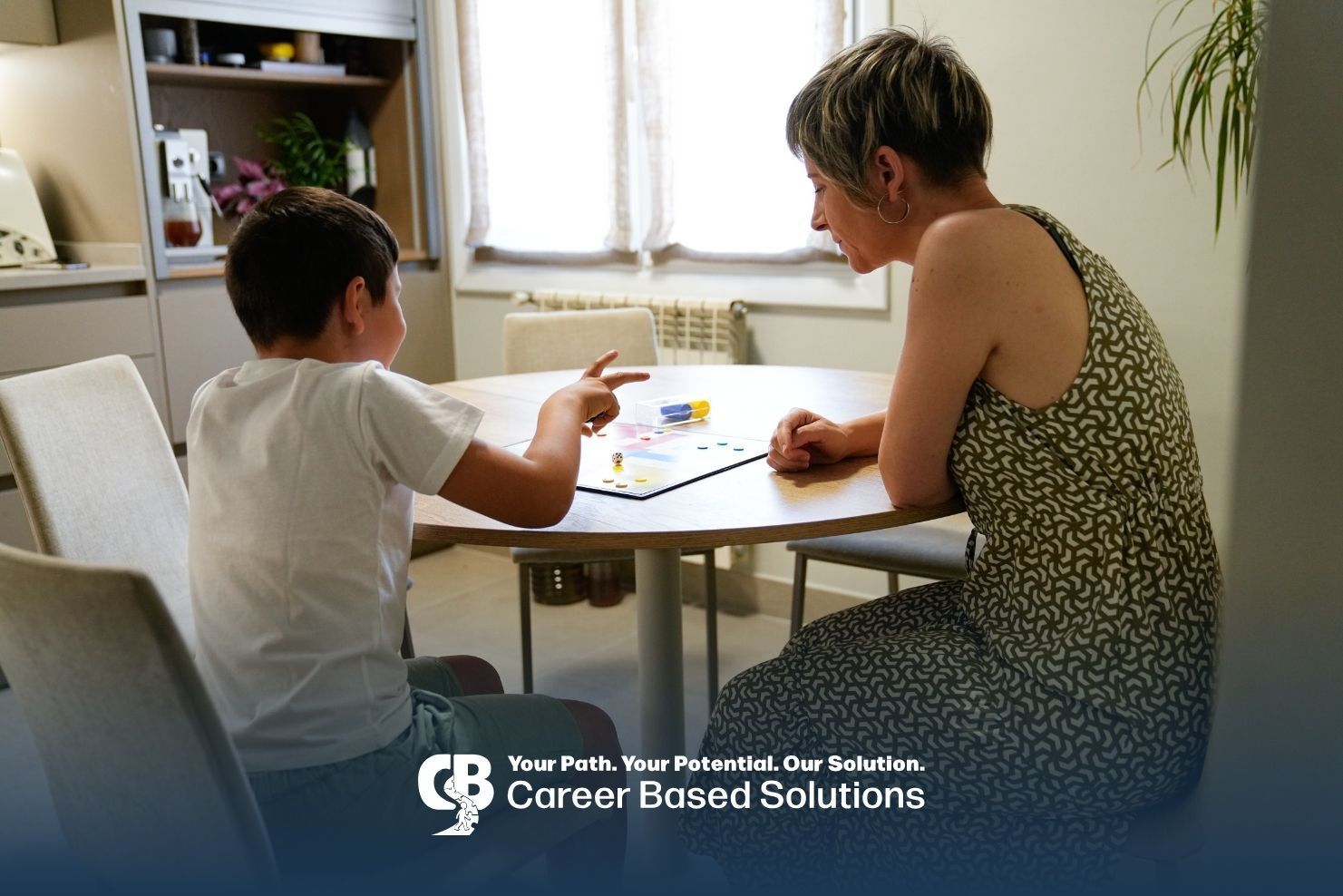
In our clinic sessions, we often use DTT for learners who benefit from predictable, repetitive practice before generalizing a skill to messier real-world situations.
Natural Environment Teaching (NET)
NET takes the same learning principles and applies them in everyday settings: during play, mealtimes, or while getting dressed. Instead of sitting at a table, the therapist follows the child's lead and embeds learning into activities the child is already motivated by.
A child who loves trains, for instance, might practice requesting, turn-taking, and color identification through a train-themed play session. NET tends to support stronger generalization because the skills are learned in the contexts where they're actually needed.
Pivotal Response Treatment (PRT)
PRT targets "pivotal" areas of development, such as motivation, self-management, and responding to multiple cues, that produce widespread improvements across other skills. It's play-based, child-directed, and heavily reliant on natural reinforcement.
Positive Reinforcement
Reinforcement is the engine of ABA. When a behavior is followed by something the child finds rewarding, that behavior is more likely to happen again. Reinforcers are individualized: for one child, it might be a few minutes with a favorite toy; for another, it might be verbal praise, a high-five, or a sensory break.
Effective reinforcement is immediate, consistent, and faded over time so the child eventually performs the skill without needing an external reward for every instance.
Prompting and Prompt Fading
Prompts are cues that help a child perform a skill correctly. They might be physical (gentle hand-over-hand guidance), gestural, verbal, or visual. The goal is never to keep prompting forever. Therapists systematically fade prompts so the child responds independently. A child who learns to wash their hands with full physical guidance, then a gesture, then a single verbal reminder, then nothing at all, has truly mastered the skill.
Task Analysis and Chaining
Complex skills (brushing teeth, packing a backpack, making a sandwich) are broken into smaller steps. The child learns each step, and the steps are "chained" together. Forward chaining teaches the first step first; backward chaining teaches the last step first so the child experiences completion early on. Both approaches can build independence in self-care and daily living routines.
Functional Communication Training (FCT)
Many challenging behaviors happen because a child does not yet have a reliable way to communicate a need. FCT teaches a functional replacement: a word, a sign, a picture exchange, or an AAC device press that gets the same result the behavior was achieving. We've worked with families who saw significant reductions in meltdowns within weeks once their child had a clear, honored way to ask for a break.
Modeling and Video Modeling
Children learn a great deal by watching others. Modeling involves demonstrating a skill in real time; video modeling uses short clips the child can rewatch. Both are particularly useful for social skills, play sequences, and self-help routines.
Token Economies
In a token economy, the child earns tokens (stickers, points, marks on a chart) for target behaviors and trades them in later for a preferred item or activity. This technique teaches delayed gratification and supports older learners who are working toward longer-term goals.
How Therapists Choose the Right Technique
No technique is universally "best." Choosing the right one depends on:
- The child's age, language level, and learning history
- The specific skill or behavior being targeted
- The setting (home, clinic, school, community)
- The family's priorities and cultural context
- Data showing what is actually working
BCBAs collect data session by session. If a technique is not producing progress within a reasonable window, the plan is adjusted. ABA is, at its core, a data-driven field. We do not keep doing what is not working.
The Role of Parents and Caregivers
Parent involvement is one of the strongest predictors of long-term progress. Children spend far more hours with their families than with any therapist. When caregivers learn to use reinforcement, prompting, and FCT strategies during everyday routines, skills generalize faster and stick longer.
Structured parent training gives families the tools to handle real situations (grocery store meltdowns, bedtime resistance, sibling conflict) using the same techniques their child's therapist is using. It also helps parents feel less alone in the process.
ABA Across Different Settings
A well-rounded behavioral intervention plan rarely lives in one location. Techniques are introduced where they will be most useful:
- Home-based sessions address self-care, family routines, sibling interactions, and community outings
- Clinic-based sessions provide a structured environment for intensive skill acquisition and peer interaction
- School-based support helps children apply skills in classroom routines, transitions, and peer relationships
- Early intervention capitalizes on the brain's neuroplasticity in the first years of life
Children who receive consistent intervention across settings tend to generalize skills more effectively than those whose support is limited to one environment.
Measuring Progress the Right Way
Progress in ABA is measured in observable, specific terms. Instead of "he's doing better socially," a good plan tracks data like "initiates a peer interaction independently in 4 out of 5 opportunities." This level of specificity protects families from vague reassurances and keeps the team accountable. Regular treatment reviews, typically every six months, give parents a clear picture of what has changed and what comes next.
Conclusion
Effective behavioral intervention is never one technique applied uniformly. It's a thoughtful combination of evidence-based strategies (DTT, NET, PRT, reinforcement, prompting, FCT, and others) tailored to each child and adjusted based on data. When therapists, families, and educators work from the same playbook, children with autism gain skills that genuinely improve their daily lives. Understanding these techniques helps every adult in a child's circle become a more effective support.
Get Personalized ABA Support in Virginia
Career Based Solutions provides individualized ABA therapy across Virginia, including
Spotsilvania,
Stafford, and
Fredericksburg, helping families turn evidence-based techniques into real-world progress. Whether you're exploring in-home ABA therapy, parent training, clinic-based services, school-based support, early intervention, or our
summer program, our BCBAs build plans around your child's specific goals.
Contact us today to schedule a consultation and learn which techniques are the right fit for your family.
Frequently Asked Questions