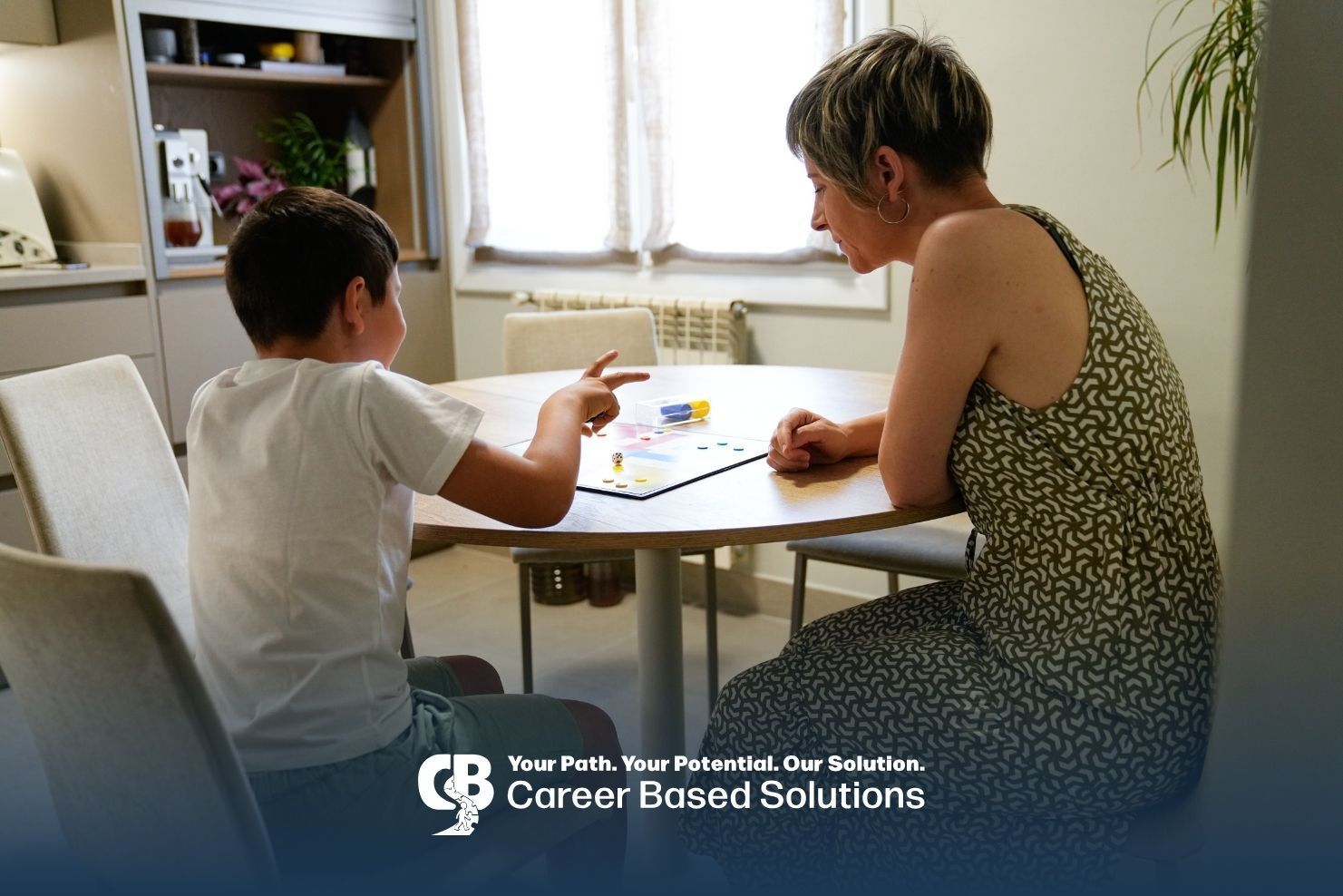
How Does ABA Therapy Actually Work?
A common misconception is that ABA is rigid drilling at a desk. Modern ABA looks very different. Here's what the process really involves:
1. The Initial Assessment
Before any therapy starts, a BCBA conducts a comprehensive assessment. They observe your child, talk with you about your family's priorities, and use standardized tools (like the VB-MAPP or ABLLS-R) to identify your child's current skills and areas where support would help most.
2. The Individualized Treatment Plan
No two ABA programs look the same. Your BCBA writes a customized plan with specific, measurable goals, things like "James will request preferred items using a 3-word phrase in 8 out of 10 opportunities" or "Maya will tolerate transitions between activities without elopement."
3. One-on-One Sessions
A trained
Registered Behavior Technician (RBT) works directly with your child, often for several hours per week, implementing the BCBA's plan. Sessions blend structured teaching with play-based learning, natural environment teaching, and lots of positive reinforcement.
4. Data, Data, Data
Every session, the therapist tracks data on your child's progress. This isn't busywork. It's how we know whether a strategy is working. In our sessions, if we're not seeing growth within a reasonable timeframe, the BCBA adjusts the approach. ABA is supposed to be flexible and responsive, not "do the same thing and hope for different results."
5. Parent Training and Caregiver Collaboration
This is where real-world progress happens. We can teach a child to wash their hands beautifully in our clinic, but if mom and dad don't know the strategies, that skill won't transfer to mornings at home. More on this below.
The Three Main Settings: In-Home, Clinic, and Community
At Career Based Solutions, we offer ABA in the settings that actually fit families' lives. Each environment has unique advantages.
In-Home ABA Therapy
In-home ABA brings the therapist to your child's natural environment, your living room, your kitchen, your backyard. This is ideal for:
- Younger children who feel anxious in unfamiliar settings
- Working on real-world skills like mealtime behavior, sibling interactions, and bedtime routines
- Families with transportation barriers or busy schedules
- Generalizing skills to where the child actually lives their life
We've seen children make remarkable progress with in-home services because we're addressing the exact moments where families struggle most, those tough afternoon transitions, the grocery store meltdowns, the morning routine.
ABA Therapy Clinic
A
clinic-based offers structure, consistency, and access to peers. Our Fredericksburg clinic is designed specifically for therapy, with sensory-friendly spaces, learning materials, and opportunities for social skills practice with other children. Clinic-based therapy is often a great fit for:
- Children who benefit from minimized home distractions
- Building skills like classroom readiness before school transitions
- Group social skills practice
- Older children working on more complex curricula
Many families find that a hybrid approach, some clinic hours and some home hours, gives their child the best of both worlds.
Parent Training
We can't say this strongly enough: parents are the most important people in any child's progress. You spend more hours with your child in a single week than we will in a month of sessions.
Parent training teaches caregivers the same evidence-based strategies our therapists use, so the learning continues after we leave. In our parent training sessions, we help families:
- Understand the
why behind their child's behaviors
- Use positive reinforcement effectively at home
- Handle meltdowns without making them worse
- Build communication and independence into daily routines
- Feel confident, not helpless, during the hard moments
Families who actively participate in parent training consistently see faster progress and more lasting results.
What Does Modern, Compassionate ABA Look Like?
If you've read older critiques of ABA, you may have concerns. The field has evolved significantly. Today's best ABA programs prioritize:
- Assent-based care: Following the child's lead and respecting their "no"
- Neurodiversity-affirming practice: Celebrating what makes each child unique rather than trying to make them appear "less autistic"
- Functional, meaningful goals: Working on skills that improve quality of life, not arbitrary compliance
- Play-based, child-led teaching: Making therapy something kids actually enjoy
When choosing a Virginia ABA provider, ask how they approach assent and child autonomy. The answer tells you a lot.
A Real Example: What Progress Looks Like
To give you a sense of what's possible, here's a composite example based on the kinds of changes we regularly see.
A four-year-old we'll call "Liam" started with us using only a handful of words and frequent meltdowns when his routine changed. Within four months of combined in-home ABA and parent training, Liam was using 4-word sentences to request, transitioning between activities with picture schedules, and most meaningfully to his parents, sitting through family dinners. His mom told us,
"It's not that he's a different kid. He's the same Liam, he just has more ways to show us who he is."
That's the goal. Not to change who your child is, but to give them tools.
How to Know If Your Child Might Benefit from ABA
Consider an ABA assessment if your child:
- Has a recent autism diagnosis or is in the diagnostic process
- Struggles to communicate wants and needs
- Has difficulty with social interactions or play
- Engages in repetitive or restricted behaviors that interfere with learning
- Has significant tantrums, aggression, or self-injury
- Needs support with daily living skills like toileting or dressing
- Is preparing to enter school and needs help with classroom readiness
In Virginia, ABA therapy is covered by Virginia
Medicaid and most major
insurance plans, including Anthem, Anthem HealthKeepers, Aetna, Cigna, Sentara, CHAMPVA, and others. A diagnosis of autism is typically required for insurance coverage.
Conclusion
ABA therapy isn't a magic fix, and any provider promising one isn't being honest with you. What ABA
is, when delivered by a skilled, compassionate team, is a structured, science-based way to help your child learn the skills they need to live a fuller, more independent, and more connected life.
If you're a parent in Fredericksburg, Spotsylvania, Stafford, or anywhere across Central Virginia and you're wondering whether ABA is right for your child, you don't have to figure it out alone.
At
Career Based Solutions, we're locally founded and BCBA-led. We offer in-home
ABA therapy in Virginia, clinic-based services at our Fredericksburg location, and dedicated parent training that empowers your whole family. Most Virginia families we work with start therapy within 2 to 4 weeks of their first call, and we handle the insurance verification and paperwork so you don't have to.
Ready to talk about what your child needs?Contact us today!
Frequently Asked Questions