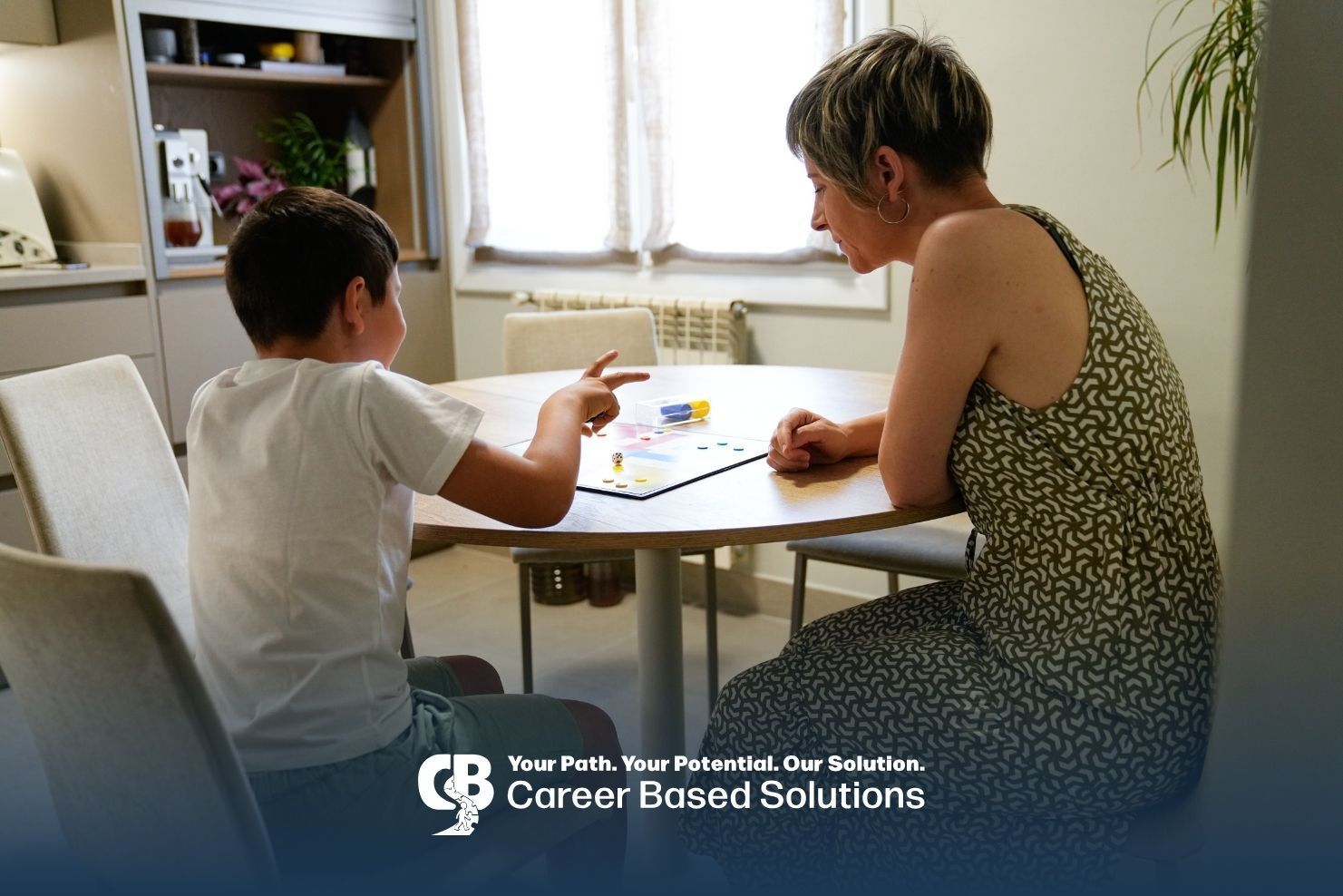
What Early ABA Therapy Actually Looks Like for Young Children With Autism
Is Early ABA Therapy Just Drills at a Table?
Getting an autism diagnosis for your child is a moment most parents never forget. And almost immediately after, a flood of questions follows: What do I do next? What does therapy even look like? Will my child be sitting at a table doing drills for hours?
These are fair questions, and the answers matter, because what happens in those first months of intervention shapes how quickly your child builds the skills they need to communicate, connect, and grow. This post is not about whether to start early (the research on that is clear). It is about what early ABA therapy actually looks like in practice, which skills are targeted, what a session looks like at age 2 versus age 4, and how families in Virginia can get moving quickly after a diagnosis.
Why the First Years Create Unique Opportunities
The brain is never more receptive to learning than it is in early childhood. During the first five years of life, neural connections form at a staggering rate, and the patterns established during this window influence how a child communicates, regulates emotions, and engages with others for years to come.
For children with autism, early Applied Behavior Analysis (ABA) therapy works within this window by teaching foundational skills before other patterns have time to solidify. When a child learns to request what they want instead of reaching and crying, or begins making eye contact during play instead of turning away, those are not small wins. They are the early building blocks that every later skill depends on.
The American Academy of Pediatrics recommends autism screening at 18 and 24 months, specifically because earlier identification means earlier access to intervention. But what families often do not find out until later is what that intervention actually involves week to week, and how dramatically it shifts depending on a child's age and skill level.
What ABA Therapy Targets at Age 2 to 3
At this age, the focus of early ABA therapy is almost entirely foundational. Sessions are short, playful, and built around the activities a toddler naturally enjoys. A 2-year-old is not sitting at a table completing worksheets. They are on the floor, moving through their environment, and learning through engagement with a therapist who is reading their cues in real time.
Core skills targeted at this stage include:
Joint attention. This is the ability to share focus on the same object or event with another person, for example, following a therapist's point to look at a toy, or looking back and forth between a parent and a dog at the park. Joint attention is one of the earliest social communication skills, and it underpins virtually everything that comes later, including language and social interaction.
Imitation. Before children can learn from instruction, they need to learn by watching. Early ABA often targets motor imitation (copying an action like clapping or banging a drum) and later vocal imitation (copying sounds and eventually words). In our sessions with toddlers, imitation is frequently the gateway skill that opens the door to language development.
Functional communication. Many 2-year-olds with autism have not yet developed reliable ways to communicate what they want, which leads to frustration and challenging behavior. Early ABA focuses heavily on teaching a child to make requests, using a word, a picture exchange system, a gesture, or a speech-generating device, in a way that actually works for that specific child.
Responding to names. A child who does not consistently respond when called is missing a critical social cue. This seems simple, but consistently building this response lays the groundwork for following directions and engaging in back-and-forth communication.
Play skills. Purposeful play with objects (rather than repetitive or non-functional use) is targeted early because play is how toddlers explore the world and connect with others. A therapist might work on simple cause-and-effect toys, building sequences, or symbolic play, like using a toy spoon to feed a doll.
What does a session look like at this age? Typically 1 to 2 hours, several times per week, often at home or in a naturalistic clinic setting. The therapist follows the child's lead across activities, embedding teaching moments into play. A parent or caregiver is usually present and actively learning strategies to carry over between sessions. There is no pressure, no forced compliance, and no drill-based repetition that resembles a flashcard lesson.
We have worked with families whose 2-year-olds came to us with no words and significant frustration behaviors. Within a few months of consistent early intervention, we regularly see children begin using single words or two-word phrases, reduce tantrums, and start making eye contact during play, changes that genuinely shift the family's daily life.
What ABA Therapy Targets at Age 3 to 4
By this stage, the foundational skills from toddlerhood are being extended and applied in more complex ways. The child is likely approaching preschool, which introduces a new set of demands: group settings, transitions, following multi-step directions, and managing emotions when things do not go as expected.
Core skills targeted at this stage include:
Expanding language. A child who has single words at age 2 may be working toward two- and three-word combinations at age 3, and toward full sentences, asking questions, and responding to others' questions by age 4. Language targets become much more nuanced. It is not just about saying more words, but using language spontaneously, in the right contexts, and for a range of functions (requesting, commenting, protesting, greeting).
Social interaction skills. At this age, children begin to notice peers more consistently, and ABA therapy starts addressing skills like taking turns, initiating interaction, responding to peers' bids for play, and tolerating proximity to others during group activities.
Emotional regulation. Preschool-aged children with autism frequently struggle to manage big emotions, especially around transitions, unexpected changes, or sensory experiences. ABA at this stage often incorporates structured strategies for recognizing feelings and using coping skills, tools that reduce meltdown frequency and help a child self-regulate across settings.
School-readiness skills. As kindergarten approaches, the focus often expands to include following classroom routines, attending to group instruction, completing tasks independently, and managing materials. These are practical skills that make the difference between a child thriving in inclusion and needing significant support.
Sessions at this age are often longer (2 to 3 hours) and may take place in a clinic, at home, or directly in a school setting. Parent training remains essential. A therapist who works with a child 10 hours per week needs a parent who can extend those strategies across the other 100+ hours.
In our school-based ABA work, we have seen children who began therapy at age 2 or 3 make the transition to kindergarten with meaningfully fewer support needs than they would have had otherwise. The skills they built early directly reduced the intensity of support required later.
What About the Days and Weeks Right After Diagnosis?
For many families, the gap between diagnosis and the start of therapy feels impossibly long and frustrating. In Virginia, navigating insurance authorizations, finding a qualified provider, and getting on a caseload can take weeks or months.
There are practical things families can do immediately:
Get a referral for a functional behavior assessment (FBA) or comprehensive ABA evaluation. This is typically the required first step for insurance authorization and helps clarify which skills to target first.
Contact your insurance provider to understand your coverage. In Virginia, most major commercial insurance plans cover ABA therapy for autism diagnoses, as do Medicaid programs. Knowing what documentation you will need upfront speeds the authorization process.
Enroll in parent training while you wait. Parent training in ABA strategies does not require your child to be on someone's caseload. It equips you with tools you can begin using immediately at home, things like reinforcement strategies, how to respond to challenging behavior, and how to build communication opportunities into daily routines.
Reach out to Virginia's Early Intervention system. For children under age 3, Virginia's Infant and Toddler Connection provides developmental services at no cost to the family. This can bridge the gap while you work toward accessing ABA services.
Document everything. Keep records of your child's behaviors, communication attempts, and developmental milestones. This documentation strengthens your case for insurance approval and gives a new therapist valuable context.
The Role of Parent Training in Early Intervention
Parent training is not a peripheral add-on to early ABA therapy. For toddlers and preschool-aged children, it may be the single most important component.
Here is why: A therapist, even a highly skilled one, may work with your child 10 to 15 hours per week. A parent is present 16 or more waking hours per day. The generalization of skills, teaching a child to use a learned behavior not just with a therapist but in all settings and with all people, depends almost entirely on what happens outside of formal therapy sessions.
In our parent training sessions, we teach caregivers how to:
- Set up the environment to encourage communication and reduce frustration
- Use natural reinforcement (the things your child already loves) to motivate skill practice
- Respond to challenging behavior in ways that do not inadvertently strengthen it
- Embed language and social skill practice into meals, bath time, car rides, and play
Families who actively participate in parent training consistently see faster generalization of skills than those who treat therapy as something that happens separately from family life.
How Service Settings Shape the Experience
One of the decisions families face early is where therapy will take place. Each setting has a distinct role, and many families use more than one.
In-home ABA therapy is often the right starting point for very young children. The home environment is where the child is most regulated and where daily routines offer the most natural teaching opportunities. Therapists can target skills within the context where they actually need to occur, during meals, transitions, play, and sibling interactions.
Clinic-based ABA therapy introduces a structured learning environment with fewer distractions and access to specialized materials. As children approach preschool age and need to build readiness for group settings, clinic time becomes increasingly valuable.
School-based ABA therapy becomes relevant when a child enters a school program. An ABA therapist working directly in the classroom can help generalize skills from home and clinic into the academic environment, support IEP goal implementation, and consult with teachers on strategies that work.
Summer ABA therapy programs address one of the most common and frustrating problems families face: skill regression during school breaks. Structured summer programming keeps skills sharp and prevents the loss of ground that so many families experience between the end of one school year and the beginning of the next.
The right combination depends on your child's age, skill level, insurance coverage, and family schedule. A qualified BCBA can help you think through which settings make sense at each stage.
What Progress Actually Looks Like
One thing worth saying plainly: progress in early ABA therapy is rarely linear, and it often does not look the way parents initially imagine.
Some children make rapid gains in language within the first few months. Others show steady but slower growth across a wider range of skills. Some weeks feel like breakthroughs; others feel like stagnation. A good ABA program monitors data continuously and adjusts the approach when something is not working. That responsiveness is what separates high-quality ABA from rote programming.
What we consistently see across our caseload is that the children who begin intervention earliest, who have caregivers actively involved in implementation, and who receive services with enough frequency to build momentum, are the children whose trajectories shift most significantly over time.
Early ABA therapy does not cure autism. It builds skills. And skills, built early, compound.
Conclusion
Early ABA therapy is not about sitting a toddler down and running drills. It is a carefully individualized process that meets a young child exactly where they are, targets the specific skills they need most, and builds across home, clinic, and school settings as the child grows. At age 2, that means joint attention, imitation, and first words. At age 4, it means expanding language, managing emotions, and getting ready for kindergarten. And throughout all of it, parents are active participants, not observers.
For families in Virginia who have just received a diagnosis, the most important thing you can do is start moving. Get the evaluation scheduled, contact your insurance, reach out to a provider, and enroll in parent training in the meantime. Every week of early intervention is a week that the developing brain is being given what it needs.
Get Started With Early ABA Therapy
Career Based Solutions provides early ABA therapy, parent training, and school-based support for families across Virginia, including Fredericksburg, Stafford, and Spotsylvania. Whether your child was recently diagnosed or you have been waiting for the right time to start, our team is here to help you take the next step.
We accept most major insurance plans, including Medicaid, Aetna, Anthem, Cigna, and others, and we will work with you through the authorization process from day one.
Contact us here to schedule an initial consultation.
Frequently Asked Questions
What skills does early ABA therapy focus on for a 2-year-old with autism?
Early ABA therapy for toddlers typically targets joint attention, imitation, functional communication (requesting), responding to their name, and basic play skills. These foundational skills are the building blocks for language, social interaction, and learning, and they are introduced through play-based, naturalistic sessions rather than structured drills.
How many hours of ABA therapy does a young child with autism need?
Recommended hours vary based on the child's age, skill level, and individual needs. Research and clinical guidelines have supported intensive early intervention ranging from 10 to 40 hours per week for young children with autism. A BCBA will conduct an assessment and recommend an appropriate level of intensity based on your child's specific profile, family schedule, and insurance coverage.
How do I start ABA therapy for my child in Virginia after an autism diagnosis?
After an autism diagnosis in Virginia, the typical steps are: obtain a referral for an ABA evaluation or functional behavior assessment, contact your insurance to understand your ABA coverage, and reach out to a qualified ABA provider to begin the intake process. For children under age 3, Virginia's Infant and Toddler Connection also offers early intervention services at no cost. Most families can begin parent training while the formal ABA authorization is being processed.
SOURCES:
https://my.clevelandclinic.org/health/treatments/25197-applied-behavior-analysis
https://www.webmd.com/mental-health/what-is-applied-behavior-analysis
https://online.regiscollege.edu/blog/aba-therapy-examples
https://pmc.ncbi.nlm.nih.gov/articles/PMC9458805/
https://www.healthline.com/health/aba-therapy

Let's Help Your Child Shine
Personalized ABA therapy built around your child's unique strengths and goals. Serving families in Fredericksburg & surrounding areas.
Other articles you might like