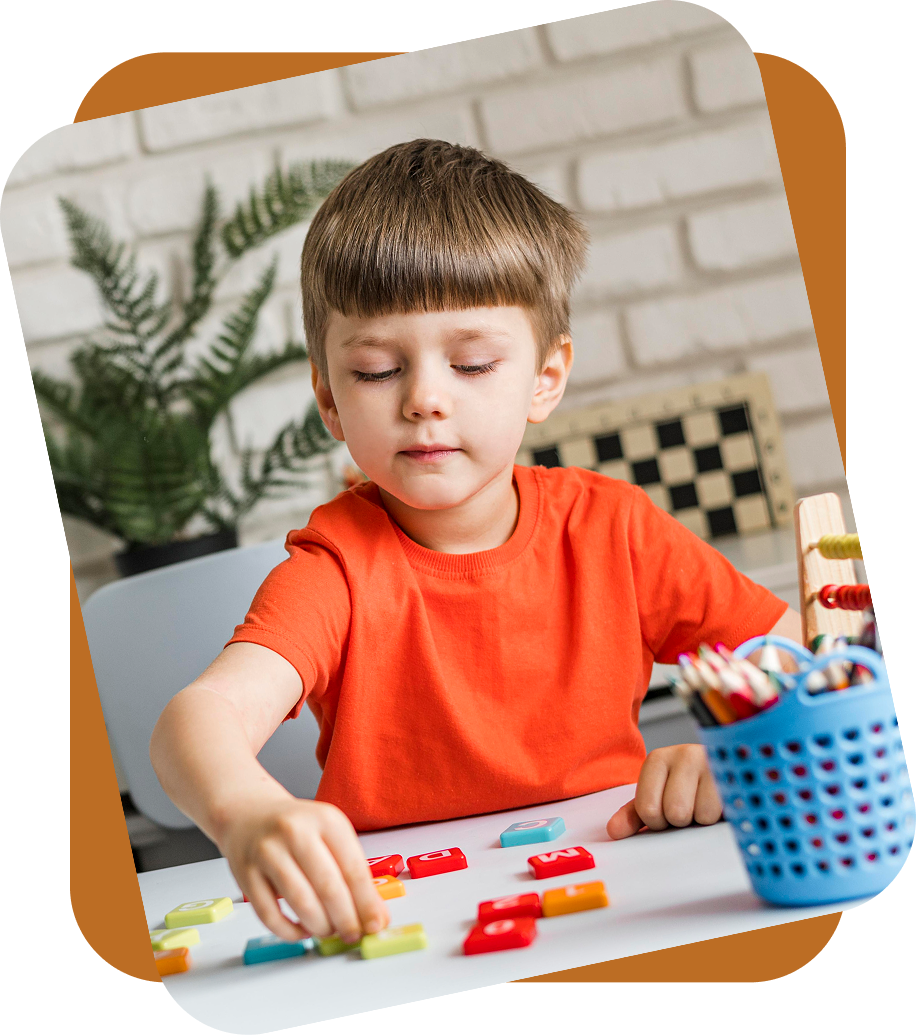
What Kindergarten Readiness Actually Means
Few questions weigh on a parent more in the months before fall enrollment than whether their child is truly ready for kindergarten. It is a fair question, and the answer is rarely a simple yes or no.
Readiness is not a single test score, and it is not the ability to recite the alphabet on cue. The American Academy of Pediatrics describes school readiness as a combination of three things: the development of the individual child, the school's ability to support children at every level, and the
resources the family and community can draw on. In other words, getting ready for kindergarten is a shared responsibility, not a finish line your child has to cross alone.
It also helps to remember that children develop at different rates. Just as they learn to walk and talk on their own timelines, they build the social, emotional, and thinking skills that school asks of them at varying ages. For autistic children in particular, readiness rarely follows a straight line. A child may be well ahead in one area and still be building skills in another, and both things can be true at the same time.
This guide walks through the developmental milestones to watch for, the social and behavioral skills that matter most in a classroom, what teachers actually expect, and how to know when it is time to ask for extra support.
Developmental Milestones to Watch for Around Age Five
The Centers for Disease Control and Prevention (CDC) publishes a
list of milestones that most children (75 percent or more) reach by age five. These are not a pass-or-fail exam. They are a helpful map for spotting where a child is thriving and where a little more support might make a difference. Around the time most children start kindergarten, the CDC suggests watching for skills in four broad areas.
Communication and language. Many five-year-olds can keep a conversation going through several back-and-forth exchanges, tell a short story with at least two events, answer simple questions about a book, and recognize simple rhymes like bat and cat. These skills matter in a classroom where so much learning happens through listening and talking.
Thinking and learning. By five, many children count to ten, name some numbers and letters when pointed to, write some of the letters in their name, use words about time such as yesterday and tomorrow, and pay attention to an activity for five to ten minutes (screen time does not count toward this). Sustained attention, in particular, is one of the skills kindergarten leans on heavily.
Movement and self-help. Hopping on one foot and buttoning some buttons are typical at this age. Self-help skills like managing buttons and zippers, using the bathroom independently, and opening a lunch container quietly shape how confident a child feels during the school day.
Social and emotional skills. Following rules or taking turns in a game with other children, doing simple chores at home, and performing or playing for an audience are common around five. These point to the cooperation and self-direction that a classroom expects.
If your child has not yet reached several of these milestones, that is not a reason to panic. It is a reason to pay attention, talk with your pediatrician, and consider whether a screening or some targeted support would help.
Social and Behavioral Readiness
Academic skills get the most attention, but teachers will tell you that social and behavioral readiness often matters more in the first weeks of kindergarten.
A few skills to watch for:
- Following directions given to a group. A child may follow instructions beautifully one-on-one and still find it hard to respond when a teacher addresses the whole class. This is one of the biggest shifts kindergarten introduces.
- Taking turns and sharing space. Group games, shared materials, and waiting for a turn are constant in a classroom.
- Separating from a caregiver. Being able to say goodbye and settle into the day, even after a rough start, supports a smoother transition.
- Managing big feelings. Frustration, disappointment, and overstimulation are part of any school day. Having a few ways to calm down, with adult help, goes a long way.
- Handling transitions. Moving from circle time to centers to lunch, often with little warning, can be tough. Children who can shift between activities tend to settle in faster.
In our sessions, we often see a child who can name every dinosaur or solve puzzles well beyond their age, and who still freezes when a direction is given to the whole room rather than to them by name. That gap, not the academic skill, is usually what shapes those first weeks of school. The encouraging part is that these are teachable, practiced skills, not fixed traits.
What Kindergarten Teachers Expect
It can ease a parent's mind to know what teachers are really hoping to see on day one. In most classrooms, the priorities are functional and social rather than academic.
Teachers generally look for a child who can:
- Follow a simple classroom routine and respond to instructions given to a group
- Sit and attend to an activity for several minutes at a time
- Manage basic self-help tasks, such as using the bathroom, washing hands, and managing a coat or lunchbox
- Stay with the group during transitions between activities
- Ask an adult for help when something is wrong
Notice what is not at the top of that list: reading, writing full sentences, or doing math. Kindergarten is designed to teach those things. What helps a child access that teaching is the ability to participate, regulate, and communicate. Building those foundational skills before school starts tends to matter more than pushing early academics.
Why Readiness Looks Different for Autistic Children
For families of autistic children, the readiness conversation can feel especially loaded. It helps to reframe it. Being autistic does not mean a child is not ready for kindergarten. Many autistic children start on time and do well, particularly when the right supports are in place.