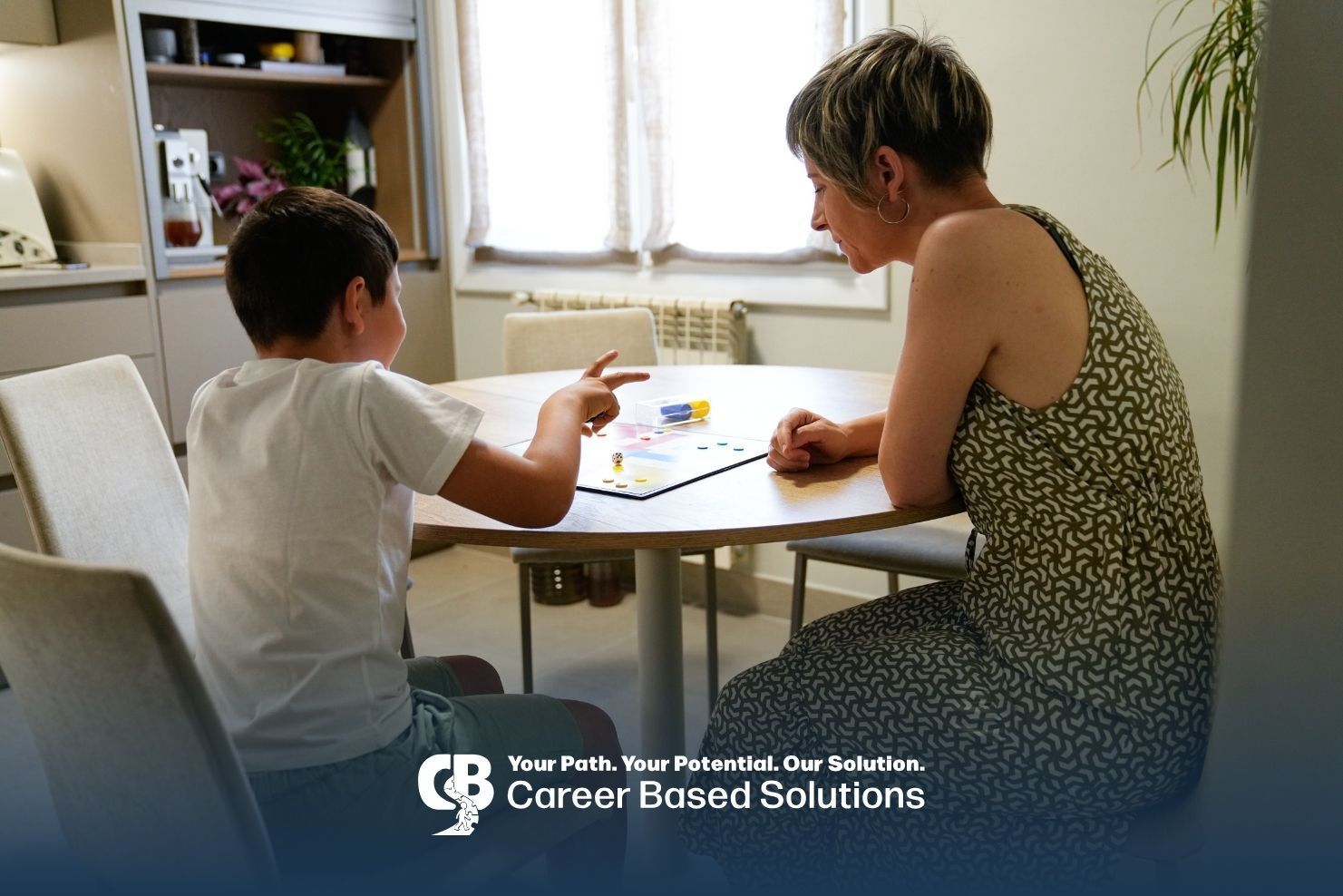
A session usually runs a couple of hours, though length and frequency depend entirely on your child's plan. The RBT works one-on-one with your child while collecting data on progress, and the supervising BCBA reviews that data regularly to adjust goals. You're not handed a generic worksheet; the program evolves as your child does.
Looking for in-home ABA therapy anywhere in Virginia?
Find out more about our
in-home ABA therapy services and how we support families across the state.
The Real Benefits of Doing ABA Therapy at Home
Home-based ABA isn't just convenient. For the right child, the home setting offers genuine clinical advantages.
Skills transfer to real life more easily. When a child learns to ask for a snack in the actual kitchen where snacks live, that skill generalizes faster than it would in an unfamiliar room. In our sessions, we've consistently seen that behaviors taught in context tend to "stick" with less effort, because there's no gap to bridge between the therapy environment and daily life.
Your child stays in their comfort zone. Many children with autism find new environments stressful. A child who is calm and regulated learns more readily than one who is anxious about an unfamiliar place. Starting in a familiar setting can lower that barrier on day one.
Families get to participate. When therapy happens at home, parents and siblings can observe, learn, and join in. This turns ABA from something that happens
to your child into something your whole family understands and supports. That ripple effect is hard to replicate elsewhere.
It's practical for busy households. No commute, no waiting rooms, and no scheduling around traffic. For families balancing work, multiple children, or limited transportation, removing those logistics can be the difference between consistent therapy and frequent cancellations, and consistency is one of the biggest predictors of progress.
Therapists see the full picture. A skilled behavior analyst learns an enormous amount by watching a child in their natural environment, including which routines trigger challenging moments and which spaces help your child thrive. That real-world insight sharpens the treatment plan in ways a clinic visit can't always reveal.
In-Home vs. Clinic-Based ABA: Which Is Better?
This is where many parents get stuck, so let's be clear: neither setting is universally "better." The right choice depends on your child and your goals.
In-home therapy shines when the priority is daily-living skills, family involvement, reducing challenging behaviors that happen at home, or easing a child who struggles with new environments. It's also ideal for younger children and for families who value flexibility.
Clinic-based therapy has its own strengths. A clinic offers a structured, distraction-controlled space, access to specialized materials, and crucially, opportunities for peer interaction and group social skills practice. For a child whose top goal is learning to navigate social situations with other kids, a clinic setting can be powerful.
Many families don't have to choose one or the other. A blended model, where a child receives most therapy at home but joins clinic-based social groups, often delivers the best of both worlds.
School-based ABA can extend that consistency into the classroom as well, so the strategies your child learns at home carry into their education. The key is matching the setting to the goal, and a good provider will help you map that out rather than pushing a one-size-fits-all model.
Ready to find the right fit for your child in Virginia?
Find out more about our in-home and
other ABA therapy programs and the
communities we serve.
Call
540-931-2853 to know your options!
The Parents' Role: Why Parent Training Is the Secret Ingredient
Here's something many families don't realize until they're in it: the most effective in-home ABA programs treat
you as part of the team.
A therapist might spend ten to twenty hours a week with your child. You spend the rest. When parents are equipped with the same strategies the RBT uses, those strategies get reinforced around the clock, on weekends, during bedtime routines, and in all the unscripted moments that fill a week. That's why quality providers pair in-home therapy with
structured parent training.
Parent training isn't about turning you into a clinician. It's about giving you practical, confidence-building tools: how to respond when your child is overwhelmed, how to encourage communication, and how to keep progress going between sessions. We've seen firsthand that families who engage in parent training tend to see faster, more durable gains because the learning never has to "pause" when the therapist leaves.
A Real Look at In-Home Progress
To make this concrete, consider a family we worked with in
King George County. Their five-year-old son had very limited verbal communication and would melt down intensely during transitions, especially leaving the house, which had made clinic appointments nearly impossible for the family to sustain.
We started fully in-home. The BCBA built a plan focused on functional communication and transition routines, and the
RBT worked these into the child's natural day, practicing requests at snack time and using visual supports before moving from one activity to the next. The parents joined the parent-training component and began using the same simple strategies in the evenings.
Over several months, the change was meaningful. The child began using short phrases to request what he wanted, and transition meltdowns dropped dramatically because he finally had a reliable way to communicate and predict what came next. Once those foundations were solid, the family felt ready to add occasional clinic-based social groups, something that would have been unthinkable at the start. That progression, from home-based stability to broader settings, is a pattern we see again and again.
Is In-Home ABA Right for Your Child?
In-home therapy tends to be an excellent fit when your child is young, when challenging behaviors show up most at home, when daily living and communication skills are the priority, or when new environments cause significant stress. It's also a strong choice for families who simply need the flexibility that home delivery provides.
A few practical factors are worth thinking through before you begin. You'll want a reasonably consistent space at home where one-on-one sessions can take place, and a willingness to be involved in parent training to extend the gains. It's also worth confirming how services are funded. Across
Virginia, many families access ABA through private insurance or through
Medicaid Waiver programs, including the Building Independence (BI), Community Living (CL), and Family and Individual Supports (FIS) waivers, which can help cover therapy for those who qualify. A good provider will verify your benefits and walk you through eligibility before services ever start, so there are no surprises.
If you're unsure, that's completely normal. The right provider won't just enroll your child in the first available slot; they'll assess your child's needs, talk through your goals, and recommend the setting, or blend of settings, that gives your child the best shot at progress.
Not sure where to start?
Discover more about our in-home ABA therapy sessions anywhere in Virginia and take the first step toward a plan built around your child.
Send us an email at
info@careerbasedsolutions.com to kickstart your child's ABA journey.
Conclusion
So, can ABA therapy be done at home? Yes, and for many children it's not just possible but genuinely advantageous. In-home ABA delivers the same evidence-based, BCBA-designed care you'd find in a clinic, while letting your child learn in the familiar environment where their new skills matter most. It makes therapy more practical for busy families, brings parents and siblings into the process, and helps skills transfer seamlessly into everyday life.
That said, the best setting depends on your child. Home-based therapy excels at daily-living and communication goals and at supporting children who find new places stressful, while clinic and school-based options add valuable structure and peer interaction. Often, the strongest results come from a thoughtful blend, paired with parent training that keeps progress going every day of the week.
If you take one thing away, let it be this: you have options, and you don't have to figure them out alone. The right partner will help you choose the path that fits your child and your family, and adjust it as your child grows.
Ready to Get Started? Contact Career Based Solutions
At
Career Based Solutions, we provide individualized, BCBA-supervised in-home ABA therapy, parent training, clinic-based services, school-based support, and a
summer ABA program designed to meet your child where they are, both literally and developmentally. We proudly serve families in
Falmouth,
Massaponax, and King George County, along with surrounding communities across Virginia.
Contact us today to schedule a consultation and take the first step toward a personalized plan for your child.
Frequently Asked Questions