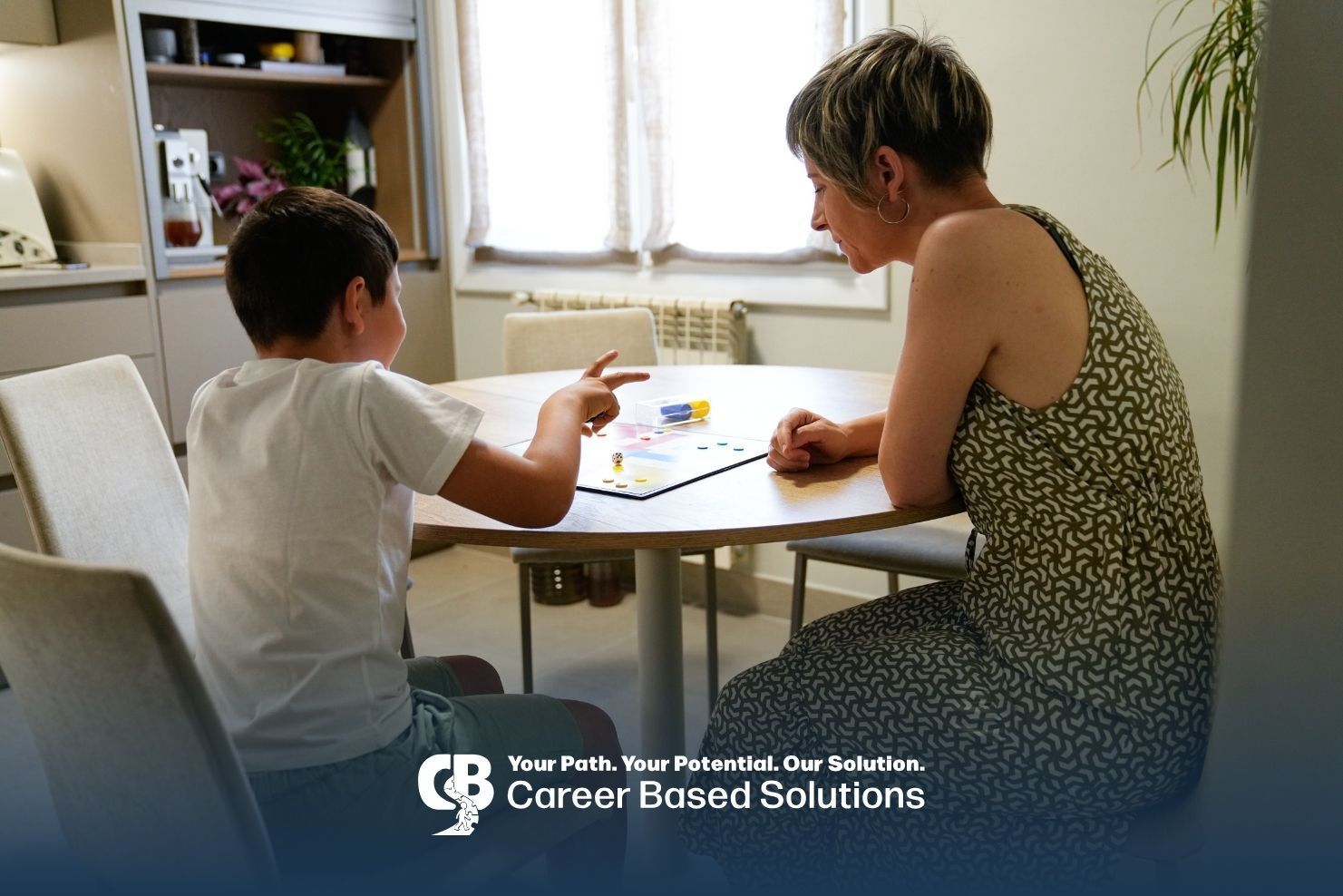
Home-Based vs. Center-Based ABA Therapy in Virginia: Choosing the Right Setting for Your Child

Introduction

Choosing where your child receives Applied Behavior Analysis (ABA) therapy is one of the most important early decisions you'll make as a parent of a child with autism. For Virginia families, the choice typically comes down to two main options: home-based ABA therapy delivered in your living room, or center-based ABA therapy provided in a structured clinic environment. Both settings are evidence-based and effective, but they serve different needs, learning styles, and family circumstances.


If you've been weighing your options and wondering which path is right for your child, this guide breaks down everything you need to know about home-based and center-based ABA therapy, including the real-world differences we've observed working with families across Virginia.


What Is ABA Therapy and Why Does the Setting Matter?

Applied Behavior Analysis (ABA) is the gold-standard, evidence-based intervention for children with autism spectrum disorder (ASD) and related developmental conditions. It uses data-driven techniques to teach communication, social skills, daily living routines, and adaptive behaviors while reducing challenging behaviors that interfere with learning.


The setting of ABA therapy matters because the environment directly shapes what your child learns and how well those skills generalize. A skill taught in one context (say, requesting a snack at a clinic) won't always transfer automatically to another context (requesting the same snack at home or at grandma's house). Understanding how each setting supports skill development is the first step in making the right choice.


Home-Based ABA Therapy: Learning in a Familiar Environment

Home-based ABA therapy means a Board Certified Behavior Analyst (BCBA) or Registered Behavior Technician (RBT) comes directly to your home to deliver sessions. Your child receives one-on-one therapy in the same space where they eat, sleep, play, and interact with family members every day.


Benefits of Home-Based ABA

Natural skill generalization. Because therapy happens where your child actually lives, skills like brushing teeth, getting dressed, transitioning between rooms, and managing siblings translate seamlessly into daily life. In our sessions, we've seen children master toileting routines and mealtime behaviors far more quickly when those skills are taught in the bathroom and kitchen where they'll actually be used.


Family involvement and parent training. Home-based sessions give parents, caregivers, and siblings the chance to observe, ask questions, and practice ABA strategies in real time. This is especially powerful when paired with formal parent training, which equips you with tools to support progress between sessions.


Comfort and reduced anxiety. Children who struggle with new environments, transitions, or sensory overload often respond better in their own space. We've worked with families whose children initially refused clinic visits but thrived once therapy moved to their living room.


Targeting real-life routines. Bedtime battles, sibling conflicts, mealtime selectivity, and morning routines can be addressed in the exact moments they happen.


Considerations for Home-Based ABA

Home-based therapy works best when the home environment can support focused sessions. Common distractions (TV, pets, household activity) require thoughtful planning. There are also fewer opportunities for peer interaction unless playdates or community outings are built into the treatment plan.


Center-Based ABA Therapy: Structured Learning in a Clinical Setting

Center-based ABA therapy takes place at an ABA therapy clinic specifically designed for learning. These spaces include therapy rooms, sensory areas, group activity zones, and dedicated equipment, all staffed by a team of BCBAs and RBTs.


Benefits of Center-Based ABA

Highly structured, distraction-free environment. Clinics are designed with one purpose: maximizing learning. Predictable routines, visual schedules, and dedicated work stations help children stay focused and progress through their goals.


Peer interaction and social skill building. This is one of the biggest advantages center-based therapy offers. Children practice turn-taking, sharing, group play, and conversational skills with peers under the direct guidance of trained professionals. We've seen children who were nonverbal in social settings begin initiating play with peers within weeks of starting center-based group activities.


Access to a full clinical team. Center-based therapy often means multiple BCBAs, RBTs, and supervisors are on-site. Collaborative consultations, observation, and quick problem-solving happen naturally throughout the day.


Preparation for school environments. The structure of a clinic mirrors many features of a classroom: following group instructions, sitting at a table for instruction, transitioning between activities on cue, and working with multiple adults. For Virginia families preparing children for school, center-based ABA can be especially valuable.


Specialized materials and sensory equipment. Clinics are stocked with curriculum-aligned materials, sensory tools, and learning aids that wouldn't be practical to bring into a home.


Considerations for Center-Based ABA

Transportation, scheduling, and the transition to a new environment can be barriers for some families. Children with significant anxiety in new spaces may need a gradual introduction.


How to Choose Between Home-Based and Center-Based ABA Therapy

There's no universally "better" option. The right setting depends on your child, your family, and your goals. Here are the key factors we discuss with every Virginia family during their initial assessment:


Your child's age and developmental level. 

Younger children, especially those under 3, often benefit from home-based therapy that focuses on early communication and daily routines. School-aged children frequently thrive in center-based settings that mirror classroom structure.


Target skills and goals. 

If goals center on toileting, mealtime, bedtime, sibling interactions, or community outings, home-based therapy is a natural fit. If goals involve peer socialization, group instruction following, or school readiness, center-based therapy is often more effective.


Family schedule and logistics. 

Working parents who can't transport a child to a clinic during the day may need in-home services. Families with multiple young children at home sometimes find center-based therapy provides a quieter learning space.


Your child's sensory and behavioral profile. 

Children sensitive to new environments may need to start at home. Children easily distracted at home may make faster progress in a clinic.


Insurance and coverage. 

Both home-based and center-based ABA are covered under most Virginia insurance plans, including Medicaid through the Early and Periodic Screening, Diagnostic, and Treatment (EPSDT) benefit, but coverage details vary. Your provider should help you verify benefits before starting services.


The Hybrid Approach: Why Many Virginia Families Choose Both

In our experience, the most effective ABA programs often combine both settings. A child might attend center-based sessions in the morning to build peer engagement and school readiness skills, then receive in-home sessions in the afternoon focused on family routines and generalization.


This hybrid model gives children the best of both worlds: structured peer learning paired with real-life application. It also gives families the flexibility to adjust as their child grows and their needs change. We've supported families across Virginia who began with full in-home services, transitioned to center-based as their child gained independence, and then layered in parent training so progress continued long after formal therapy ended.


Conclusion

Choosing between home-based and center-based ABA therapy isn't about picking the "best" option in a vacuum. It's about matching the environment to your child's needs, your family's daily life, and the goals you want your child to reach. Home-based therapy offers comfort, natural generalization, and intensive family involvement. Center-based therapy offers structure, peer interaction, and school-readiness skills. Many children benefit most from a thoughtful combination of both.


The most important step is partnering with a provider who takes the time to understand your child's individual profile and recommends a setting (or combination of settings) based on what will actually work for your family, not a one-size-fits-all approach.


Get Started With ABA Therapy That Fits Your Family

At Career Based Solutions, we provide in-home ABA therapy, parent training, and ABA therapy clinic services for children with autism and related conditions across Virginia, including Stafford, Spotsylvania, and Falmouth. Our team works closely with each family to design an ABA treatment plan in VA that fits your child's strengths, your family's schedule, and your long-term goals, whether that's home-based, center-based, or a combination of both.


Ready to talk to a Virginia ABA provider who listens? Contact us today!


Frequently Asked Questions

  • Is home-based or center-based ABA therapy more effective?

    Neither setting is universally more effective. Research shows both home-based and center-based ABA therapy produce strong outcomes when delivered by qualified BCBAs and RBTs. The right choice depends on your child's age, goals, sensory profile, and family needs. Many children make the most progress when both settings are combined.


  • Does insurance cover home-based and center-based ABA therapy in Virginia?

    Yes. Most private insurance plans in Virginia, as well as Medicaid through the EPSDT benefit, cover both home-based and center-based ABA therapy when prescribed for a child with an autism diagnosis. Coverage details, authorization requirements, and session limits vary by plan, so it's important to verify benefits with your provider before starting services.


  • Can my child receive both home-based and center-based ABA therapy at the same time?

    Yes, and many families choose this hybrid approach. Combining center-based sessions for peer interaction and school readiness with home-based sessions for daily routines and family involvement often delivers the strongest results. Your BCBA can recommend the right split of hours based on your child's treatment plan and goals.


SOURCES:


https://pmc.ncbi.nlm.nih.gov/articles/PMC5621997/


https://autismpartnership.com.sg/en/home-vs-center-aba/


https://www.happyoak.ca/home-based-vs-centre-based-aba-therapy


https://www.forbes.com/sites/forbesbooksauthors/2019/05/24/home-based-vs-center-based-services-for-autism/


https://www.appliedbehavioranalysisedu.org/in-home-care/


A child in an orange shirt sits at a desk, arranging colorful plastic letters on a white surface.

Let's Help Your Child Shine

Personalized ABA therapy built around your child's unique strengths and goals. Serving families in Fredericksburg & surrounding areas.

Share this article

Other articles you might like

Therapist & autistic boy using a bead maze toy during an interactive ABA learning session indoors
May 29, 2026
Confused about ABA therapy vs occupational therapy for your child with autism? Learn the key differences, where they overlap, and which one fits your child.
Therapist observing & taking notes while autistic girl draws on the floor during ABA therapy
May 23, 2026
Virginia parents discover how ABA therapy bridges with school IEP goals, using CBS’s proven collaboration strategies to support lasting progress everywhere.
Autistic boy outdoors in summer hat looks concerned, showing sensory or routine challenges.
May 23, 2026
Discover why summer is harder for autistic children, from lost routines to sensory overload, and learn practical strategies to help your child thrive.
Autistic students reading from a tablet in a library setting, highlighting educational support
May 23, 2026
Learn how Virginia determines ESY eligibility, five qualifying factors explained, plus how ABA therapy supports summer learning for children with autism.
Therapist helps autistic boy with schoolwork at kitchen table, supporting ABA therapy and learning.
May 23, 2026
When school ends, ABA therapy doesn't have to. Learn how Virginia families can maintain progress through summer programs, in-home, and clinic services.
Autistic boy enjoying a snack with a therapist at the beach, encouraging social interaction
May 23, 2026
Learn proven strategies to prevent autism regression over the summer. Keep your child's skills strong with routines, ABA therapy, and parent training tips.
ABA Therapy Summer Programs: What Parents Really Want | CBS
May 23, 2026
Discover what parents actually look for in ABA therapy summer programs, from preventing skill regression to building family routines that genuinely work.
Therapist helping autistic girl with drawing at a table while working on a laptop during therapy
April 30, 2026
Discover ABA therapy resources, local schools, RACSB support, & family services for autism in King George County, VA. Learn how Career Based Solutions can help.
Two autistic kids playing with a wooden train track on the floor, encouraging social interaction
April 30, 2026
Learn what causes challenging behaviors in autistic children, how the ABC model & FBAs work, and how CBS's ABA therapy in Virginia can help your child thrive.
Autistic toddler taking first steps toward a therapist with outstretched hands, showing development
April 30, 2026
Learn how ABA therapy supports children with autism in mastering potty training, with step‑by‑step strategies from Virginia’s trusted Career Based Solutions.
Show More