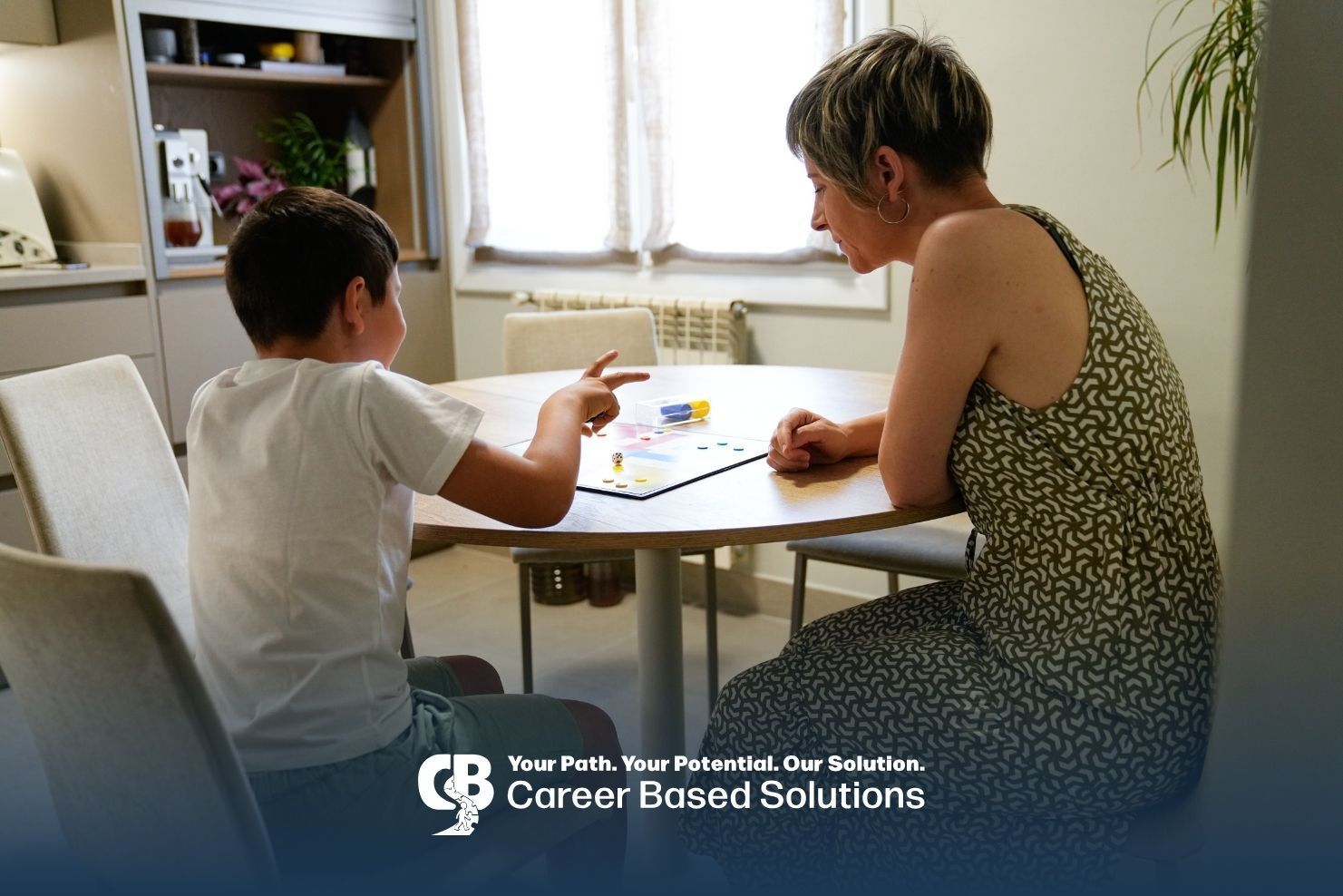
Some families choose intensive summer programming five days a week. Others prefer a lighter schedule that leaves room for camp, travel, or grandparents. There isn't one right answer. What matters is having a plan in place before June, not scrambling for one in July.
When School Ends Permanently
The third ending is the hardest to plan for because it's the one parents try not to think about too soon. In Virginia, students with disabilities are eligible for public school services until they turn 22. After that, the IEP team disbands, the bus stops coming, and the family is suddenly responsible for filling the entire week.
ABA therapy doesn't disappear at 22, but the funding source and service model often shift. Adult ABA looks different from pediatric ABA. The focus moves toward vocational skills, independent living, community navigation, and self-advocacy. Programs that prepare young adults for supported employment, volunteer work, or daily living independence are where the field is genuinely growing.
For families approaching this transition, we encourage starting the conversation by age 16. That gives the IEP team time to write transition goals that align with adult services, and it gives parents time to research providers,
Medicaid waiver options, and adult day support programs. The families who feel most prepared at 22 are almost always the ones who started planning at 17.
Why Continuity Matters More Than Intensity
A common misconception is that more hours of ABA always equal better outcomes. The research actually points to a more nuanced truth: consistency and quality matter more than raw hours. A child receiving twelve well-structured hours of ABA every week, year-round, will typically outperform a child receiving thirty hours that are interrupted by long breaks.
This is why families who plan for transitions, rather than reacting to them, see the best outcomes. The behavior analysts, technicians, and parents involved all stay aligned on goals, data collection continues without major gaps, and the child doesn't have to rebuild rapport with a new team every few months.
In our practice, we've seen families patch together strong year-round programs by combining services. A typical example might look like school-based ABA during the academic year, transitioning to a summer
clinic program in June, with
parent training woven throughout to keep strategies consistent at home. The specific mix matters less than the principle: don't leave gaps.
Options for Maintaining ABA Therapy Outside of School
Families in
Virginia generally have five primary avenues for keeping ABA therapy going when school is out of the picture, whether daily, seasonally, or permanently.
In-home ABA therapy brings a registered behavior technician and a board-certified behavior analyst into the home, where they can work on skills in their natural environment. This is often the strongest option for generalization and family involvement.
Clinic-based ABA therapy provides a structured environment with peer interaction, specialized materials, and a team-based setting. Many families use clinic-based services as a school-day alternative or as a summer replacement for the lost school structure.
Summer ABA programs run during the months when school is out, typically with a focus on skill maintenance, social opportunities, and goals that don't fit easily into the academic year.
Parent training is the often-underused multiplier. When parents learn the same techniques their child's ABA team uses, the entire household becomes a reinforcement environment. Parent training is especially valuable during transitions when professional hours may be reduced.
Hybrid models combine two or more of the above. A child might attend a clinic in the morning and receive in-home services in the afternoon. The flexibility of ABA as a field means most schedules can be built around what the family actually needs.
Virginia-Specific Considerations
Funding is a real part of this conversation. In Virginia, ABA therapy for children with
autism is covered by most commercial
insurance plans, the Family Access to Medical Insurance Security Plan (FAMIS), and Medicaid through the Department of Medical Assistance Services (DMAS). Coverage extends to in-home, clinic-based, and certain school-adjacent services, though the specific authorization process varies by plan.
For families navigating the transition to adult services, the
Developmental Disabilities (DD) Waiver and the Commonwealth Coordinated Care Plus (CCC+) Waiver are the primary funding mechanisms for ongoing behavioral support after age 21. Waitlists for waivers in Virginia can be significant, which is another reason early planning matters.
If your child currently receives school-based services through an IEP, those services end with the school year and don't automatically resume in the summer unless Extended School Year (ESY) services are written into the IEP. ESY is not automatic, and it's not the same as a full summer ABA program. Many families layer ESY with private ABA to bridge the gap.
Conclusion
ABA therapy doesn't have to end when school ends, whether you're talking about the end of the day, the end of the year, or the end of your child's school career. The families who maintain progress are the ones who plan ahead, build relationships with providers who can flex with the calendar, and treat ABA as a year-round investment rather than a school-year service.
The transitions are real, but they're manageable. After-school in-home support fills the generalization gap. Summer programs prevent regression and create growth opportunities that the classroom can't offer. Adult-focused services pick up where school services leave off and prepare young adults for the lives they want to lead. With the right mix in place, the calendar matters less than the consistency of care behind it.
Continue Your Child's Progress with Career Based Solutions
At
Career Based Solutions, we help families across
King George,
Locust Grove, and
Thornburg maintain consistent ABA therapy in Virginia through every transition, from the end of the school day to the years beyond graduation. Whether you're looking for in-home support, a structured summer program, clinic-based services, or parent training, our team builds plans around your family's calendar and your child's goals.
Ready to talk about what comes next?
Contact us today!
Frequently Asked Questions