How ABA Therapy Helps Autistic Children Build Social Skills

Why Social Skills Matter for Autistic Children

Social skills are how we connect with one another. They include sharing attention, taking turns, reading and sending social cues, starting and holding a conversation, and building friendships. For many autistic children, these skills develop along a different path and on a different timeline than they do for neurotypical peers. That difference does not make a child any less capable or valuable, but it can create real barriers: difficulty joining play at recess, frustration when needs are not understood, or feeling left out in a group.


According to the Centers for Disease Control and Prevention, about 1 in 31 children in the United States is identified with autism, and differences in social communication are a core part of how autism is described. Supporting a child's social development is not about making them "less autistic" or teaching them to hide who they are. It is about expanding the tools a child can use to connect with the people around them, in ways that feel authentic to them.


Applied behavior analysis, or ABA, is one of the most widely studied approaches for supporting social communication. When it is delivered thoughtfully and respectfully, ABA can help children learn skills that open doors to friendship, independence, and self-advocacy. This guide explains what social skills look like in ABA, the methods therapists use to teach them, how goals change as a child grows, and how families and schools can reinforce progress every day.


What "Social Skills" Really Means in ABA Therapy

"Being social" is a big, fuzzy idea. One of the strengths of ABA is that it breaks that idea down into specific, observable, teachable skills, so progress can actually be supported and measured rather than just hoped for.


The Core Social Skills ABA Targets


Depending on a child's age and individual goals, an ABA program may focus on skills such as:


  • Joint attention: sharing focus on an object or event with another person, such as looking where someone points or showing a toy to a parent.

  • Turn-taking and sharing: waiting, trading, and participating in back-and-forth exchanges during games and play.

  • Play skills: moving from solo play toward parallel, cooperative, and imaginative play with peers.

  • Conversation skills: initiating, responding, staying on topic, and knowing how to start and end an interaction.

  • Reading and using nonverbal cues: facial expressions, body language, tone of voice, and personal space.

  • Perspective-taking: understanding that other people have their own thoughts, feelings, and points of view.

  • Emotional regulation in social settings: recognizing feelings and using coping tools when a situation becomes overwhelming.

  • Group participation: following routines, sharing space, and contributing in a classroom or team setting.

  • Self-advocacy: asking for help, saying no, and communicating preferences and boundaries.


Reframing the Goal: Connection, Not Conformity

A quality ABA program treats social skills as a way to give a child more access to relationships, not as a checklist for making the child appear neurotypical. That distinction matters. Forced eye contact, suppressing self-soothing movement, and scripting a child to "act normal" can do more harm than good, and they are not the goal of affirming social-skills work.


Instead, the aim is to honor how each child communicates while building bridges to others. A child who uses an augmentative and alternative communication (AAC) device is communicating, and that counts. A child who flaps their hands when excited is still learning to share that excitement with a friend. Modern, ethical ABA follows the child's lead, seeks the child's assent, and measures success by whether the child can connect more comfortably and more often, on terms that work for them.


How ABA Therapy Teaches Social Skills

Effective social-skills teaching rarely looks like a worksheet at a table. It looks like play, conversation, and real life, with a trained therapist creating opportunities for connection and gently building on what the child already does.


Naturalistic, Play-Based Teaching

Naturalistic teaching embeds learning into activities a child already enjoys. If a child loves trains, a therapist might join that play and create natural moments for requesting, sharing, and taking turns. Because the skill is practiced in a meaningful, motivating context, it tends to stick and transfer to daily life better than drills do. This approach is a natural fit for in-home ABA therapy, where therapy happens inside a child's everyday routines and relationships.


Modeling and Video Modeling

Children learn a great deal by watching. Therapists, parents, and peers can model a target skill, such as greeting a friend or asking to join a game. Video modeling, where a child watches a short clip of the skill being performed, is especially helpful for many autistic learners because it is visual, predictable, and can be reviewed as many times as needed.


Social Narratives and Visual Supports

Social narratives and visual supports make abstract social situations concrete. Short stories that describe a situation and helpful responses, visual schedules, and comic-strip style conversations can prepare a child for new or tricky moments, like a birthday party or a fire drill. These tools reduce uncertainty, which often reduces anxiety and frees up a child's energy for connecting.


Positive Reinforcement and Child Assent

Reinforcement simply means that behaviors followed by something meaningful are more likely to happen again. In affirming practice, therapists lean on natural reinforcement wherever possible, where the reward for a social attempt is the social outcome itself, such as a peer laughing along or a game continuing. Programs are built around a child's interests and assent, so the child is a willing participant rather than someone being pushed through unwanted demands.

Practicing and Generalizing Across Settings

A skill is only useful if it shows up in real life. Generalization is the deliberate work of helping a child use a new skill across people, places, and situations, not just with one therapist in one room. Strong programs plan for this from the start, practicing in the clinic, at home, in the community, and at school so that progress carries over to where it matters most.


Social Skills Goals Across Development

Social-skills work is never one-size-fits-all. Goals are individualized and shift as a child grows.


Early Childhood and Early Intervention

In the youngest years, goals often center on foundational skills like joint attention, imitation, responding to one's name, and early play. Research consistently shows that starting support early can make a meaningful difference, which is why families often pursue early intervention ABA therapy as soon as concerns arise. It is worth saying clearly, though, that progress is possible at every age, and it is never too late to build new skills.


School-Age Children

For school-age children, social goals frequently focus on conversation, cooperative play, friendship-building, and participating in group activities. At this stage, navigating the classroom and the playground becomes central, and skills like reading social cues and managing disagreements take on new importance.


Teens and Young Adults

For teens and young adults, the focus often shifts toward self-advocacy, workplace and community interactions, relationships, and the everyday independence that adulthood requires. Social-skills work at this stage is highly practical and tied directly to the goals the young person has for their own life.


Building Social Skills Beyond the Therapy Room

Therapy sessions are a starting point, not the whole picture. The fastest, most durable progress happens when the skills practiced in sessions are reinforced everywhere the child lives and learns.


How Parents and Caregivers Help Every Day

Parents and caregivers are a child's most consistent social partners, which makes them powerful teachers. Through parent training, families learn how to create natural opportunities for connection, model skills, and respond in ways that encourage communication during ordinary routines like mealtime, bath time, and play. The goal is not to turn parents into therapists, but to weave support into the relationship that already matters most to the child.


Supporting Social Skills at School

School is where many social moments happen, so coordination with educators is essential. School-based ABA therapy brings support directly into the classroom, helping a child apply skills in real time alongside peers. For families in Virginia, this work also aligns with a child's Individualized Education Program (IEP), so that goals at school and goals in therapy reinforce one another rather than pulling in different directions.


Practicing in the Community

Real friendships and real confidence are built in real-world settings: playgrounds, libraries, clubs, and group activities. Structured group experiences, including options like a summer ABA therapy program, give children a supported space to practice with peers when school is out. For some families, a center-based setting also helps, and an ABA therapy clinic can offer structured peer interaction with trained staff close at hand.


What Progress Looks Like, and What to Expect

Honest expectations matter. Social-skills development is rarely a straight line. Children make gains, plateau, and surge again, and that is normal. Good programs track progress with data so that teaching can be adjusted based on what is actually working for the individual child, not on assumptions.


In our sessions, we have seen how powerful naturalistic, interest-based teaching can be. One young child we supported rarely responded when other kids invited him to play. Rather than drilling him on scripts, his team started by joining the games he already loved, building small back-and-forth moments around his fascination with trains. Over several months, those shared moments grew into him approaching peers on his own to start a game.


Progress like that does not show up overnight, and it does not look identical for any two children, but it is real, and it is built one genuine interaction at a time.


It also helps to remember what success means. The win is not a child who masks their autism flawlessly. The win is a child who can connect, communicate their needs, and take part in the relationships and activities that matter to them, with more ease and more confidence than before.


Conclusion

Above all, affirming social-skills work is about connection, not conformity. The goal is to help each child engage with others in a way that honors who they are, so they can build the relationships and the confidence to thrive.


Get Started with Career Based Solutions

If your child could benefit from individualized, affirming support for social development, Career Based Solutions is here to help. We provide in-home, school-based, and clinic-based ABA therapy for families across Virginia, including Thornburg, Locust Grove, and King George, with programs built around each child's strengths, interests, and goals.


Contact us today to schedule a consultation and learn how we can support your child's social growth. 


Frequently Asked Questions

  • How does ABA therapy improve social skills?

    ABA therapy improves social skills by breaking broad social abilities into specific, teachable steps such as joint attention, turn-taking, and conversation, then teaching those steps through play, modeling, visual supports, and positive reinforcement. Therapists create natural opportunities for connection based on a child's interests, and they plan for generalization so the skills transfer to home, school, and the community.


  • At what age should social skills therapy start for a child with autism?

    Earlier support often leads to stronger gains, so many families begin as soon as they notice differences in communication or play, sometimes in toddlerhood through early intervention. That said, social skills can be learned at any age. School-age children, teens, and young adults all benefit from individualized goals tailored to their stage of life, so it is never too late to start.


  • Can autistic children learn to make friends through ABA therapy?

    Yes. While friendship cannot be forced, ABA therapy can build the underlying skills that make friendship possible, such as initiating interactions, sharing, taking turns, reading social cues, and managing disagreements. Affirming programs focus on helping a child connect authentically rather than masking who they are, and they create structured, supported chances to practice with peers.


SOURCES:


https://www.cdc.gov/autism/


https://www.nimh.nih.gov/health/topics/autism-spectrum-disorders-asd

https://asatonline.org/


https://autisticadvocacy.org/


https://www.asha.org/practice-portal/clinical-topics/social-communication-disorder/


https://vcuautismcenter.org/


https://www.bacb.com/

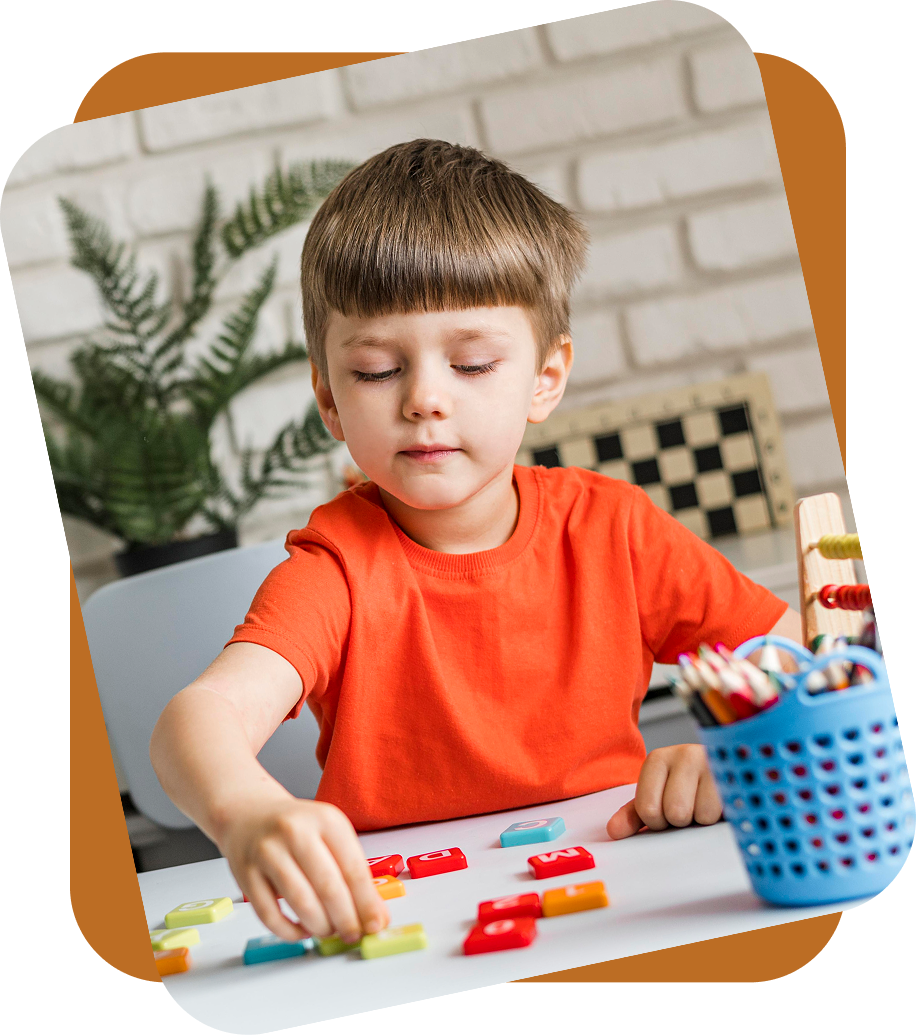
A child in an orange shirt sits at a desk, arranging colorful plastic letters on a white surface.

Let's Help Your Child Shine

Personalized ABA therapy built around your child's unique strengths and goals. Serving families in Fredericksburg & surrounding areas.

Share this article

Other articles you might like

Autistic boy holds a colorful puzzle while looking toward the beach, encouraging calm sensory play
July 12, 2026
Summer heat, sensory overload, and broken routines often trigger autism meltdowns. Discover ABA-based strategies to ease stress and help kids cope calmly.
Therapist & autistic child fold colorful paper boats together beside a lake while enjoying summer.
July 11, 2026
Learn practical, ABA-informed strategies to help your autistic child stay on a predictable routine all summer long, from visual schedules to transitions.
Autistic boy wearing glasses is sitting comfortably on a couch while looking at a laptop screen.
July 10, 2026
Learn how screen time impacts autistic children and discover ABA-informed strategies to build healthy routines, balance tech use, and support family well-being.
Therapist tucks a sleeping autistic boy under a blanket while another therapist rests beside them
July 8, 2026
Autism and sleep problems often go hand in hand. Learn why, what signs to watch for, and practical strategies Virginia parents can start using tonight.
A therapist using visual cards with autistic child at home, demonstrating effectiveness of  therapy
June 29, 2026
Learn what home-based ABA therapy is, how in-home sessions work, the key benefits for autistic children, and how Virginia families can get started with care.
Three autistic children hugging and giving thumbs up while standing together on a playground.
June 29, 2026
Discover real ABA therapy success stories showing how children with autism build communication, independence, and confidence through evidence-based care.
Therapist helping an autistic boy place colorful shapes into a wooden puzzle board during therapy.
June 28, 2026
Explore evidence-based ABA therapy techniques that support meaningful behavior change, skill-building, and progress for children with autism in Virginia.
Two autistic young boys lying on wooden floor playing with colorful toy airplane and blocks.
June 25, 2026
Discover the main types of autism, how diagnostic categories have evolved over time, and what each profile means for support, school success, and daily living.
 An Autistic boy sitting outdoors in winter reading a book on wooden bench in snowy backyard.
June 25, 2026
When was autism discovered? Explore its history from the 1940s to today, and what this journey means for Virginia families seeking ABA therapy support.
Therapist engaging with autistic kids during a classroom activity & supporting communication
June 21, 2026
Starting a new school year? Learn what to tell your child's new teacher about their ABA program, how to keep therapy and school consistent, and what to say.
Show More