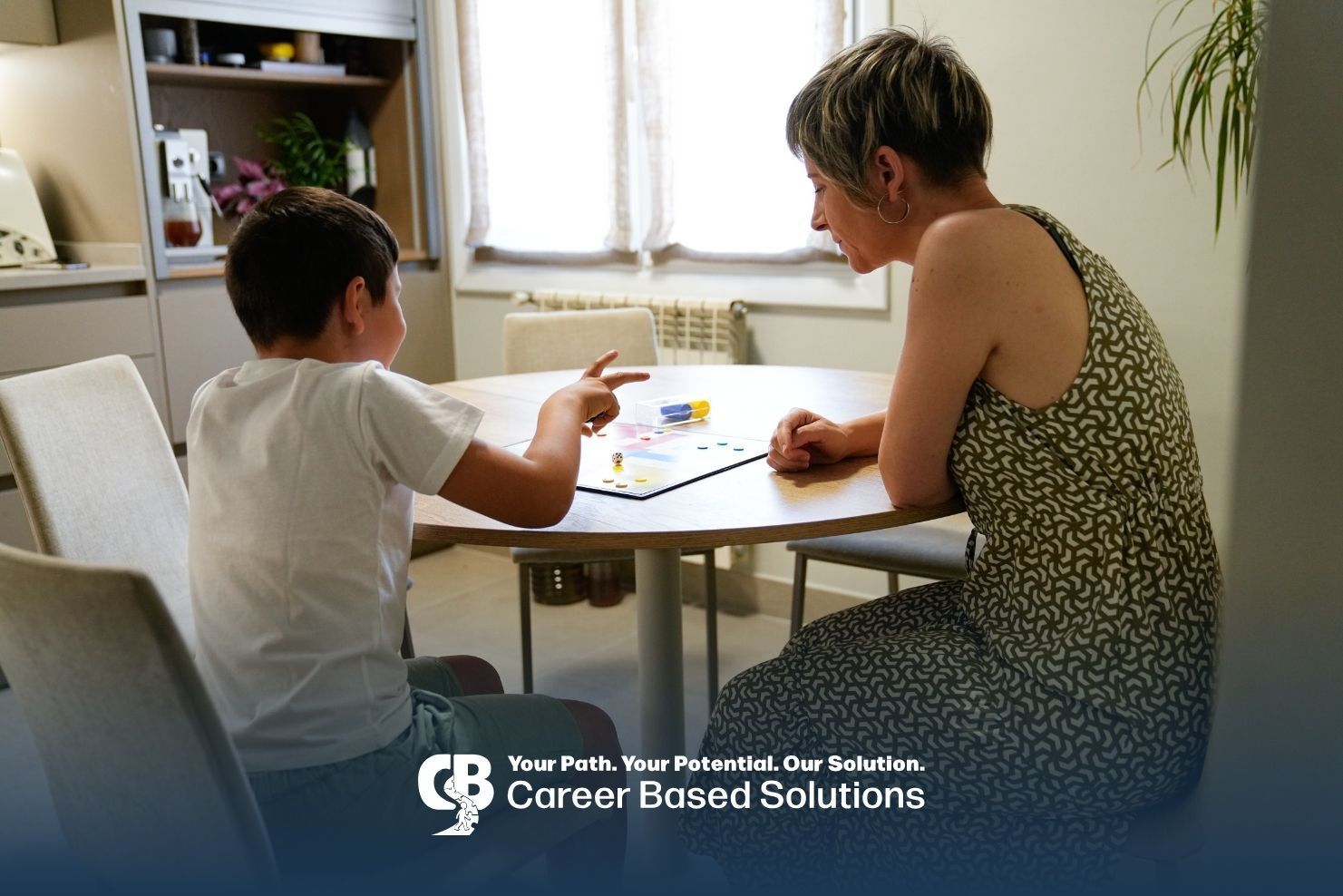
Teaching Daily Living Skills Through ABA Therapy: How Task Analysis Builds Adaptive Skills
Why Daily Living Skills Deserve a Central Place in ABA Therapy
Ask a group of parents what they most want for their autistic child, and the answers are rarely abstract. They want their child to brush their own teeth without a forty-minute standoff. They want a morning routine that does not end with someone in tears. They want their teenager to be able to make a sandwich, pack a bag, or use a public restroom independently on a school trip.
These are daily living skills, sometimes called adaptive skills or self-help skills, and they are among the most meaningful targets in applied behavior analysis. Language and social goals often get the spotlight, but adaptive skills are what determine how much support a person needs across an ordinary day. They shape independence at home, participation at school, and options in adulthood.
The encouraging part is that daily living skills respond very well to behavior-analytic teaching. A skill that looks impossibly complex from the outside is almost always a chain of smaller behaviors, and each of those smaller behaviors can be taught, practiced, and reinforced. This article walks through how ABA therapy approaches daily living skills and adaptive skills across ages, with concrete examples of what the teaching actually looks like.
What Counts as a Daily Living Skill?
Adaptive skills are the practical, everyday abilities a person uses to take care of themselves and function in their environment. Standardized adaptive behavior assessments, such as the Vineland Adaptive Behavior Scales, generally sort them into a few broad domains.
Personal Care and Hygiene
This is the category most families think of first: toothbrushing, handwashing, showering or bathing, hair care, toileting, dressing, and managing personal items. These skills repeat every single day, which makes them excellent teaching targets. Frequent natural opportunities mean faster acquisition.
Household and Domestic Skills
Making a simple meal, using a microwave safely, loading a dishwasher, sorting and folding laundry, wiping a counter, taking out trash, making a bed, and managing personal belongings. For older learners, this extends to meal planning, basic cleaning routines, and organizing a personal space.
Community and Functional Skills
Crossing a street safely, using money or a payment card, ordering at a counter, riding public transportation, following a shopping list, and navigating a familiar building. These skills often require the most planning because they involve unpredictable environments.
Safety and Self-Advocacy
Knowing what to do if separated from a caregiver, identifying trusted adults, communicating discomfort or pain, refusing unsafe requests, and asking for help. These are frequently underprioritized and, in our experience, are the skills families are most relieved to see progress on.
An important note on how these skills are chosen: adaptive skill goals should reflect what the individual and their family actually need, not a generic checklist. A goal is worth teaching if it increases independence, expands access to environments the person wants to be in, or reduces the amount of support required for something that happens daily.
How Task Analysis Turns a Big Skill Into Teachable Steps
Task analysis is the backbone of daily living skills instruction in ABA. It means breaking a complex behavior into a sequence of discrete, observable, teachable steps.
The reason this matters is simple. "Get dressed" is not a behavior. It is a bundle of maybe thirty behaviors when wearing a trench coat. When a learner struggles with getting dressed, the problem is almost never the whole routine. It is two or three specific steps buried inside it. Task analysis makes those steps visible so instruction can target exactly where the breakdown happens.
Here is what that looks like in practice.
Example: Handwashing
A task analysis for handwashing might read:
- Walk to the sink
- Turn on the water
- Wet both hands
- Pump soap once into palm
- Rub palms together
- Rub backs of hands
- Rub between fingers
- Rinse hands under water
- Turn off water
- Pull paper towel or reach for hand towel
- Dry both hands
- Discard towel or hang it up
A behavior analyst runs a baseline probe first, asking the learner to complete the routine with no help, and records which steps they perform independently. Very often the result is surprising. A child who "cannot wash their hands" may independently perform nine of the twelve steps and stall only at soap dispensing and drying. Teaching then focuses there rather than rehearsing the entire chain from scratch.
Example: Putting on a Pullover Shirt
- Pick up shirt
- Orient the shirt so the tag faces away from the body
- Gather the bottom hem with both hands
- Push head through the neck opening
- Push right arm through the right sleeve
- Push left arm through the left sleeve
- Pull the hem down to the waist
Step two, orientation, is the step that trips up more learners than any other. Once you see it isolated on paper, the intervention becomes obvious: teach a reliable visual cue, such as always finding the tag or a printed graphic, rather than repeatedly correcting an inside-out shirt after the fact.
Example: Making a Bowl of Cereal
- Get a bowl from the cabinet
- Get a spoon from the drawer
- Place bowl and spoon on the table
- Get the cereal box
- Pour cereal to the line marked on the bowl
- Close the cereal box and return it
- Get milk from the refrigerator
- Pour milk to the line
- Close the milk and return it to the refrigerator
- Sit and eat
Notice steps five and eight. Pouring "the right amount" is an abstract judgment, so it gets converted into something concrete and visible: a line on the bowl, a small pitcher instead of a full gallon jug, or a measuring cup. Adapting the materials is often faster and more respectful than drilling a fine motor judgment the learner does not yet have.
Adjusting the Grain Size
One of the clinical judgments a behavior analyst makes is how finely to slice the steps. A learner with strong motor imitation may only need six steps for handwashing. A learner who is just beginning may need soap dispensing broken into three separate movements. If a learner is stuck on a step for weeks, the usual fix is not more repetitions. It is a finer task analysis.
Chaining: Teaching the Steps in Sequence
Once the steps are identified, they are taught using chaining procedures. There are
three common approaches.
Forward chaining teaches step one to mastery while the instructor completes the rest, then adds step two, and so on. This suits routines where the early steps are the hardest.
Backward chaining has the instructor complete every step except the last, letting the learner finish the routine. The learner gets to experience completion and its natural reinforcement immediately. Backward chaining is a strong choice for skills where the payoff sits at the end, such as putting on shoes and then heading outside to play.
Total task chaining teaches every step in every session, with prompting provided as needed on the steps that require it. This is often the default for learners who already perform several steps independently, and it keeps the routine intact and natural.
In our Virginia sessions, backward chaining is frequently the difference-maker for learners who have a history of frustration with a specific routine. Ending on success changes how a learner approaches the task the next day.
Prompting and Prompt Fading
Prompts are the supports that help a learner perform a step correctly. The goal is always to remove them. A skill that only occurs with an adult standing there giving instructions is not yet independent.
| Prompt type | What it looks like | Level of intrusiveness |
|---|---|---|
| Full physical | Hand-over-hand guidance through the movement | Most intrusive |
| Partial physical | A light touch at the elbow or wrist to initiate | High |
| Modeling | Demonstrating the step for the learner to imitate | Moderate |
| Gestural | Pointing to the soap dispenser | Lower |
| Verbal | Saying "Now rinse" | Lower |
| Visual | A picture sequence or written checklist posted at the sink | Lowest, and often permanent |
Two general strategies guide prompt use. Most-to-least prompting starts with substantial support and systematically reduces it, which limits errors and is useful for safety-related skills or brand new routines. Least-to-most prompting gives the learner a chance to respond independently first, then adds help only if needed, which suits skills that are partially acquired.
Visual supports deserve a special mention. A laminated picture sequence beside the shower or a checklist inside a closet door is not a crutch to be eliminated. Plenty of adults use recipe cards and phone reminders. If a visual support allows someone to complete a routine without another person present, that is independence, and it should be kept.
Reinforcement That Actually Fits the Skill
Daily living skills come with a built-in advantage: many of them produce natural reinforcement. Getting dressed leads to going outside. Making a snack leads to eating the snack. Whenever possible, teaching is arranged so that the natural outcome does the reinforcing work, because natural consequences are always available and never need to be faded.
Additional reinforcement is often needed early on, especially for routines with no immediate payoff. Toothbrushing produces no reward a child cares about, so something else has to bridge the gap at the beginning. That might be access to a preferred activity, a token board, or simply enthusiastic acknowledgment, depending on what the learner actually values. Preference assessments matter here. Assuming what a learner will find reinforcing is one of the fastest ways to stall a program.
Reinforcement is then thinned deliberately as the skill becomes fluent, shifting toward the natural outcome and toward the learner's own sense of having done it themselves.
Generalization and Maintenance
A skill that only happens in one bathroom with one therapist is not a functional skill. Programming for generalization is planned from the start, not tacked on at the end.
That means varying the materials, so a learner who washes hands with a pump dispenser also encounters a bar of soap and an automatic dispenser. It means varying the setting, so the routine is practiced at home, in the clinic, and in a community restroom. It means varying the people, so parents, siblings, teachers, and therapists all deliver the same instruction in the same way.
This is where parent training becomes essential rather than optional. A morning routine taught only during therapy hours will not survive a real Tuesday morning. When caregivers run the task analysis with the same steps and the same prompt levels, acquisition accelerates dramatically. The same principle applies in the classroom, which is why school-based ABA therapy coordinates directly with teachers and support staff on adaptive skill targets.
Maintenance is the other half. Once a skill is mastered, periodic probes confirm it is still happening. Skills that are not used regularly do fade, and a quick booster is far easier than reteaching.
Measuring Progress in a Way Families Can See
Daily living skills programs generate clear data because task analysis makes the measurement obvious. Each step is scored as independent or prompted, and the percentage of independent steps is tracked over time.
This is one of the most satisfying data sets to share with families, because progress is legible. A parent can look at a graph and see that their child went from three independent steps to nine on the same routine. That is a concrete change in their household, not an abstract clinical metric.
Broader adaptive functioning is typically assessed with standardized tools such as the Vineland Adaptive Behavior Scales, and skill-specific curricula like the Assessment of Functional Living Skills or Essential for Living help identify which targets to prioritize next.
Teaching Daily Living Skills at Different Ages
The principles do not change across the lifespan, but the targets and the tone certainly do.
Younger Learners
Early instruction tends to focus on foundational routines: hand washing, undressing before dressing, using a spoon and fork, drinking from an open cup, and beginning toileting.
Teaching happens inside naturally occurring routines rather than at a table. Early intervention services build these routines while they are still forming, which is generally easier than modifying an entrenched pattern later.
School-Age Learners
Targets expand to full dressing including fasteners, independent showering, packing a backpack, simple food preparation, and chore routines. Self-management tools come into play here, such as checklists a learner marks off themselves.
Teens and Adults
Instruction shifts toward the skills that determine adult independence: laundry from start to finish, meal preparation with a heat source, medication routines, money handling, transportation, scheduling, and hygiene routines connected to puberty and adult life.
Two things matter enormously with older learners. First, dignity. Task analysis for an adult should never feel infantilizing, and instruction should happen privately and respectfully, with the learner's assent treated as a real consideration. Second, choice. Teenagers and adults should be helping to select their own goals. A skill someone wants to learn is learned far faster than one assigned to them.
What This Looks Like Across Different Service Settings
Where daily living skills are taught depends on where they naturally occur, which is why setting matters so much for this particular skill area.
In-home ABA therapy has an obvious advantage: the bathroom, the kitchen, and the closet in question are the actual ones the learner uses every day, which removes an entire generalization step. A clinic setting offers controlled practice, peer models, and access to a full team, which suits skills that need heavy repetition before they move into the home.
School programs address the adaptive skills that shape a student's day, including managing belongings, following classroom routines, and using the restroom independently. And summer programming offers something the school year rarely does: extended blocks of time for community-based practice, which is exactly what generalization needs.
Most families end up combining settings, and that is usually the right call for adaptive skills specifically.
A Realistic Picture of the Timeline
Families often ask how long a skill takes. The honest answer is that it varies enormously based on the complexity of the routine, the learner's existing repertoire, how many practice opportunities occur naturally each day, and how consistently the plan is followed outside of therapy hours.
What we can say from experience is that the routines that move fastest are the ones with multiple daily opportunities and consistent implementation across everyone in the learner's life. Handwashing happens many times a day. Showering happens once. That difference alone predicts a great deal about pace.
We also see families underestimate how much progress has occurred, because change in adaptive skills is gradual and invisible day to day. This is another argument for keeping the data. A graph does not forget what October looked like.
Conclusion
Daily living skills are where ABA therapy tends to produce the changes families feel most immediately. The method is not mysterious. A complex routine gets broken into observable steps through task analysis, those steps get taught in sequence through chaining, prompts provide support that is then systematically faded, reinforcement makes the behavior worth repeating, and deliberate planning ensures the skill shows up in real environments with real people.
What makes the difference between a program that works and one that stalls is rarely the technique. It is the follow-through: consistent implementation at home and at school, goals chosen because they matter to the individual rather than because they appear on a checklist, and enough patience to let a slow-building skill build. Independence in adaptive skills is not a single milestone. It is an accumulation of small, well-taught steps, and every one of them counts.
Talk With Our Team About Adaptive Skills Goals
Career Based Solutions provides ABA therapy to families in Virginia, including Richmond, Ashland, and Woodbridge, with programming built around the daily living skills that matter most in each household. Whether your priority is a smoother morning routine, independent hygiene, or preparing a teen for adult responsibilities, our team can assess current skills and build a plan that fits your family's real life.
Contact us today to schedule a consultation and talk through what independence could look like for your child.
Frequently Asked Questions
What are daily living skills in ABA therapy?
Daily living skills, also called adaptive skills or self-help skills, are the everyday abilities a person uses to care for themselves and function independently. In ABA therapy, this includes hygiene and personal care, dressing, eating and food preparation, household chores, safety awareness, and community skills such as handling money or using transportation. ABA teaches these skills by breaking each routine into small, observable steps through task analysis, then teaching those steps in sequence with prompting and reinforcement until the learner can complete the routine independently.
At what age can a child start learning daily living skills through ABA?
Adaptive skill instruction can begin as soon as a child is developmentally ready for the specific routine, and many foundational skills such as hand washing, undressing, and using utensils are appropriate for very young learners. There is also no upper age limit. Teens and adults regularly make significant gains in areas like laundry, meal preparation, medication routines, and community navigation. The teaching principles remain the same across ages, while the specific targets, materials, and level of learner input in choosing goals change to fit the person's age and priorities.
How does ABA therapy teach a skill like getting dressed or brushing teeth?
The behavior analyst first writes a task analysis that lists each step in the routine, then runs a baseline to see which steps the learner already performs independently. Teaching targets the steps that need support, using a chaining procedure such as forward, backward, or total task chaining. Prompts are provided at the level the learner needs, whether physical, model, gestural, or visual, and are systematically faded so the learner is not dependent on an adult. Progress is tracked as the percentage of steps completed independently, and the skill is then practiced across different settings, materials, and people so it holds up in daily life.
SOURCES:
https://www.cdc.gov/autism/
https://www.nimh.nih.gov/health/topics/autism-spectrum-disorders-asd
https://www.nichd.nih.gov/health/topics/autism\
https://www.bacb.com/
https://www.abainternational.org/
https://onlinelibrary.wiley.com/journal/19383703
https://www.pearsonassessments.com/
https://autismsociety.org/
Let's Help Your Child Shine
Personalized ABA therapy built around your child's unique strengths and goals. Serving families in Fredericksburg & surrounding areas.
Other articles you might like