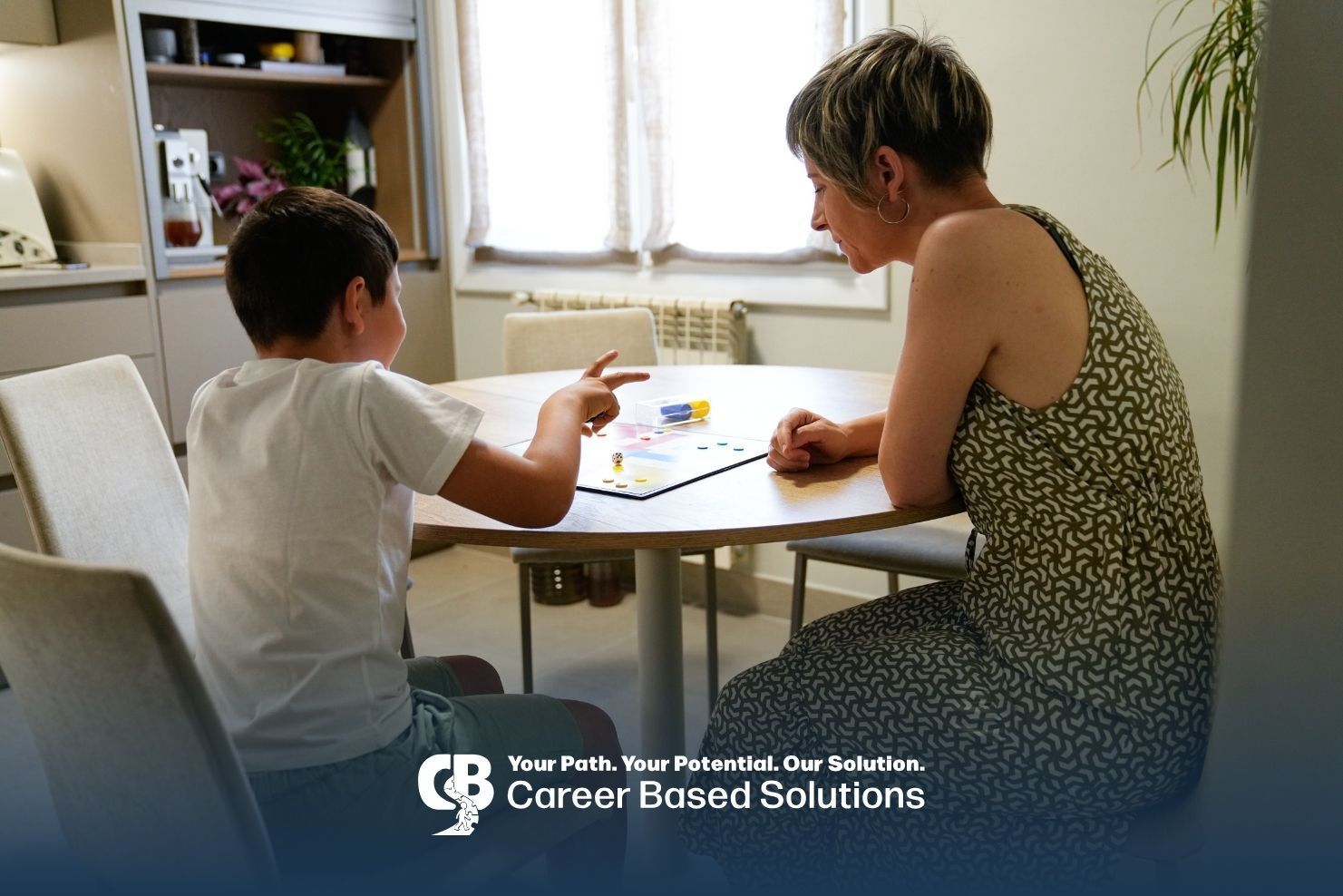
How to Help Classmates Understand Autism and Include an Autistic Peer

Why Peer Understanding Matters More Than Awareness

Most schools have some version of an awareness campaign. A poster goes up, a video plays during morning announcements, and the message is roughly "be kind to everyone." That message is not wrong, but it rarely changes what happens at recess.


Inclusion is not a feeling. It is a set of behaviors that classmates learn, practice, and repeat. A student who knows that a peer is autistic but does not know how to invite that peer into a game has awareness without skill. The gap between the two is where most social exclusion lives.


Research supports this distinction. Peer-based instruction and intervention, in which classmates are directly taught how to initiate and respond to interactions, is recognized as an evidence-based practice for autistic students by the National Clearinghouse on Autism Evidence and Practice. In other words, teaching peers works. Simply informing them does not do much on its own.


There is a second reason peer understanding matters. Students with disabilities are at elevated risk of bullying, and one protective factor is having friends who are respected by other classmates. Building genuine peer relationships is not a nice extra. It is a safety issue.


Start With the Autistic Student and Their Family

Before anything is explained to a class, one conversation has to happen first: the one with the autistic student and their family.


We have seen well-meaning teachers plan an entire "autism talk" for a class without telling the family until the week before. Even when the intent is generous, the effect can be that a child's private medical information becomes a classroom lesson without their input. That is not inclusion. That is disclosure.


Asking for Consent Before Sharing Anything

An autism diagnosis is protected information. Families decide whether it is shared, with whom, and in how much detail. Some families are enthusiastically open. Others prefer that the diagnosis stay private while the supports stay visible. Both choices are legitimate, and both can produce an inclusive classroom.


If the student is old enough to weigh in, they should. Many autistic students in upper elementary and beyond have strong opinions about how they want to be described, and honoring those opinions is often the difference between a child who feels represented and a child who feels exposed.


Deciding How Much to Share, and Who Shares It

There are usually three workable options, and families should be walked through all of them:


  • Full disclosure with the student's participation. The student, or a parent, explains autism directly to the class. This works beautifully when the student wants the platform.

  • Explanation without naming a diagnosis. The class learns about communication differences, sensory needs, and support tools generally, and learns how to respond to them. No child is labeled.

  • Support-focused framing only. The teacher explains specific accommodations as facts of classroom life. "Some people use headphones to focus. Some people use a picture board to talk. All of those are just tools, like glasses."


In our experience, the third option is underrated. Younger classmates rarely need a diagnostic category. They need to know what to do when a peer covers their ears or does not answer a question right away.


Age-Appropriate Ways to Explain Autism to Classmates

The explanation that lands with a six-year-old will bore a thirteen-year-old, and the explanation that respects a thirteen-year-old will confuse a first grader. Match the language to the audience.


Preschool and Early Elementary, Ages 3 to 7

Keep it concrete, behavioral, and free of abstraction. Children this age accept differences readily when the differences are explained as simple facts rather than problems.


Useful framing sounds like: "Everybody's brain works a little differently. Some people talk with words, some people use a tablet, and some people point. All of those are real ways of talking." When a specific behavior comes up, explain it plainly. "Loud noises hurt his ears, so he covers them. He still wants you here."


Then give them one thing to do. Young children do not need a concept. They need an action. "If you want to play with her, you can sit next to her and add a block to her tower." That is a complete lesson.


Upper Elementary, Ages 8 to 11

At this age, students notice differences and start forming social hierarchies around them. They can handle more nuance, and they will ask direct questions.


Introduce the idea that autism is a difference in how the brain processes information, not an illness and not something contagious. Address the myths head-on, particularly the common belief that autistic people do not have feelings. Explain that autistic classmates often feel things very intensely and may show those feelings differently than expected.


This is also the age to teach the difference between a meltdown and a tantrum. A tantrum is goal-directed. A meltdown is a nervous system overwhelmed past its limit. Once students understand that distinction, they stop reading distress as misbehavior.


Middle and High School, Ages 12 and Up

Older students deserve honesty and a role. Talk about the social model of disability, about how environments create barriers, and about what accommodation actually means. Many teenagers respond well to autistic self-advocates speaking in their own voice, whether through videos, books, or a guest speaker.


At this age, avoid anything that sounds like an assignment to be nice. Adolescents detect and resent pity. Frame it instead as social competence: knowing how to communicate across differences is a skill that will matter in every workplace they ever enter.


Classroom Activities That Build Empathy Without Singling Anyone Out

The failure mode of most inclusion lessons is that one child becomes the subject of the lesson. Here is how to avoid that.


The point is not simulation of disability, which can backfire and produce pity rather than respect. The point is that every student discovers that communication breakdowns are shared problems, not one person's deficit.


Build Structured Opportunities for Shared Interests

Friendship grows from common ground, not instruction. Interest-based clubs, lunch groups organized around a topic, and structured cooperative activities give autistic students a natural entry point where the conversation has a subject and does not depend on small talk.

Assign clear roles in group work. Ambiguity is where exclusion happens. When every student has a defined job, no one gets quietly left out of the task.


Use Peer Modeling and Buddy Systems Carefully

Peer support arrangements work when peers are actually trained and when the relationship is reciprocal. They fail when a classmate is assigned as a helper, and the autistic student becomes a project.

Two safeguards make the difference. First, rotate participation so several students take part rather than one designated buddy. Second, structure the activity so the autistic student contributes something too, whether that is expertise in a shared interest, a role in the game, or leadership on a task. Reciprocity is what turns a support arrangement into a friendship.


What to Avoid When Explaining Autism to Peers

A few patterns consistently do damage:


  • Framing the student as a problem to be managed. Any explanation that opens with what a child cannot do sets the social frame for the rest of the year.

  • Speaking about the student while they are in the room and not participating. If they are present, they are part of the conversation.

  • Presenting inclusion as charity. "Be nice to him" produces tolerance at best. "Here is how to play with him" produces friendship.

  • One-and-done lessons. A single assembly does not build habits. Brief, repeated reinforcement across the year does.

  • Overcorrecting classmates in the moment. Public correction teaches other students that interacting with their autistic peer is risky. Coach privately.


How Families and Schools Can Work Together in Virginia

Peer understanding is not only a classroom culture question. It can be built into a student's formal supports.


Writing Peer Support Into the IEP

Social goals belong in the IEP alongside academic ones, and they should be written observably. "Will initiate a social interaction with a peer during unstructured time" is measurable. "Will improve social skills" is not.


Families can also request that peer-mediated strategies be named in the services section, along with who will train the participating classmates and how often. Virginia families can find state guidance through the Virginia Department of Education and free training resources through the VCU Autism Center for Excellence, which supports school divisions across the Commonwealth.


Bringing ABA Support Into the School Day

Skills practiced in a clinic room do not automatically transfer to a cafeteria. That transfer has to be planned.


School-based ABA therapy puts a behavior technician in the setting where the social interaction actually happens, which allows peer coaching to occur in real time rather than in a debrief afterward. For families building foundational communication and play skills first, in-home ABA therapy and structured sessions at our ABA therapy clinic create the base those peer interactions rest on. Parent training matters just as much, because parents are the ones coaching playdates, birthday parties, and neighborhood friendships where no therapist is present.


For younger children, early intervention ABA therapy establishes joint attention and play skills before peer groups solidify, and our summer ABA therapy program keeps social practice going through the months when school routines disappear.


What Progress Actually Looks Like

Parents often ask what a successful outcome looks like, and the honest answer is that it is usually quieter than expected.


In our Virginia sessions, we have watched a first grader go from being physically avoided at the sensory table to having two classmates who consistently sat near him, not because anyone told them to, but because a technician had spent six weeks teaching those two students how to join his play instead of redirecting it. He did not suddenly become chatty. The classmates simply learned his entry point.


We have also worked with a middle schooler whose peers assumed she was uninterested in them because she rarely made eye contact during conversations. Once her small group learned that she was listening closely while looking away, the dynamic shifted within days. Nothing about her changed. What changed was the interpretation.


That is the realistic goal. Not that an autistic student becomes indistinguishable from their classmates, but that their classmates learn to read them accurately and know what to do next.


Conclusion

Helping classmates understand and include an autistic peer starts with consent, moves through age-appropriate explanation, and ends in practiced behavior rather than good intentions. Ask the family and the student first. Match the explanation to the developmental level of the audience. Build activities that teach every student something rather than spotlighting one. Avoid pity framing, one-time assemblies, and helper arrangements that never become mutual. And where it helps, write peer support into the IEP so the strategy survives a change of teacher.


Inclusion is built in small, repeated moments: an invitation to a game, a correctly read facial expression, a classmate who knows to add a block to the tower instead of knocking it over. Those moments are teachable, and the teaching works.


Talk With Our Team

Career Based Solutions provides ABA therapy for children and families across Virginia, including Arlington, Alexandria, and Fairfax, including school-based support designed to build peer relationships in the settings where they actually form. 


If you would like help writing social goals into your child's IEP or bringing structured peer support into their school day, contact us to talk through what your family needs.


Frequently Asked Questions

  • How do you explain autism to a child in simple terms?

    Describe it as a difference in how a person's brain takes in information, and connect it to something the child can observe. Something like: "Her brain notices sounds much more strongly than yours does, so noisy rooms feel painful to her. That is why she wears headphones." Then give the child a concrete action, such as how to invite that classmate into an activity. Avoid describing autism as an illness or as something that needs fixing, and skip the diagnostic vocabulary with children under about eight.


  • Should classmates be told that a student is autistic?

    Only with the permission of the family, and ideally with the input of the autistic student. The diagnosis is private information. Many classrooms build strong inclusion without ever naming a diagnosis, by teaching students how to respond to communication differences, sensory tools, and support strategies as ordinary features of the room. If the family does choose disclosure, involving the student in how it is presented tends to produce a much better outcome.


  • What classroom activities help build empathy toward autistic students?

    Activities where every student experiences a communication constraint tend to work best, because they frame differences as shared rather than belonging to one child. Interest-based lunch groups, cooperative tasks with clearly assigned roles, and trained peer support arrangements that rotate among several classmates all build real interaction. Avoid disability simulations that generate pity, and avoid any activity that positions one student as the subject of the lesson.


SOURCES:


https://ncaep.fpg.unc.edu/ebp/peer-based-instruction-and-intervention/peer-mediated-instruction-and-intervention/


https://afirm.fpg.unc.edu/


https://www.doe.virginia.gov/programs-services/special-education/specific-disabilities/autism


https://vcuautismcenter.org/


https://www.stopbullying.gov/bullying/special-needs

https://www.pacer.org/bullying/info/students-with-disabilities/


https://autisticadvocacy.org/


https://iidc.indiana.edu/irca/articles/incorporating-typical-peers-into-the-social-learning-of-children-with-autism-spectrum-disorders.html

A child in an orange shirt sits at a desk, arranging colorful plastic letters on a white surface.

Let's Help Your Child Shine

Personalized ABA therapy built around your child's unique strengths and goals. Serving families in Fredericksburg & surrounding areas.

Share this article

Other articles you might like

Autistic child sits in dental chair as dentist prepares for a calm, supportive visit experience.
August 27, 2026
Learn how to prepare your autistic child for a dentist visit with sensory-friendly prep, social stories, practice visits, and ABA strategies that work.
Autistic kid working on activity with therapist during a learning session focused on communication
August 24, 2026
Learn the common signs of anxiety in autistic children and teens, why it looks different, and how families and schools in Virginia can offer real support.
Child participating in a therapy activity with a professional using colorful shapes to encourage lea
August 23, 2026
Learn what neurodiversity affirming ABA looks like in practice, from following a child's lead to respecting stimming and prioritizing real communication.
An autistic boy practicing daily living skills with a therapist during a structured activity
August 22, 2026
See how ABA teaches daily living skills and adaptive skills using task analysis, chaining, prompting, and reinforcement, plus practical steps for families.
Autistic kid learning healthy eating habits with an therapist preparing vegetables after therapy
August 21, 2026
Learn how ABA therapy supports picky eating and autism-related mealtime challenges, from food chaining to parent coaching, and when to involve a feeding team.
Autistic kid working on school activities with therapist, highlighting classroom learning & support.
August 17, 2026
Wondering if your child needs classroom support? Learn seven signs your child may benefit from school-based ABA therapy, plus what to do next in Virginia.
Autistic boy exploring sensory-friendly school supplies and clothing options during shopping
August 17, 2026
Find sensory-friendly back-to-school clothes, supplies, and backpacks for sensory-sensitive kids, plus tips on fit, fabrics, and school sensory tool rules.
Autistic child overwhelmed at desk with schoolwork, capturing the stress of first school day.
August 16, 2026
Practical, calm ways to ease first day of school anxiety for autistic children, from school visits and visual schedules to social stories that build confidence.
Therapists supporting autistic kid at home with educational activities & preparing for a transition
August 14, 2026
Learn how to prepare your autistic child for middle school, from lockers and class changes to IEP updates, executive function skills, and first-week plans.
Therapist & autistic kid meeting with an educator to discuss school planning & learning activities
August 13, 2026
Virginia parents’ guide to IEP prep: gather records, understand rights under state law, question goals, and plan next steps for effective school support
Show More