Do babies with autism smile?

Introduction

One of the most common and emotional questions we hear from parents in Fredericksburg, Virginia is:


“Do babies with autism smile?”


If you’ve noticed differences in your baby’s facial expressions or social responses, it’s completely natural to feel concerned. Smiling is one of the earliest ways babies connect with caregivers, so any variation can feel significant.


The short answer is: Yes, babies with autism can smile.


However, the
type, timing, and social use of smiles may look different.

In this article, we’ll explore:


  • Typical smile development in babies

  • How smiling may differ in infants later diagnosed with autism

  • What research says

  • When to seek an evaluation

  • What families in Fredericksburg can do next

Typical Smile Development in Babies

Understanding typical development helps provide context.

Most babies show:


1. Reflex Smiles (0–2 months)

These are involuntary and often occur during sleep.


2. Social Smiles (6–8 weeks)

This is when babies begin smiling in response to caregivers, during eye contact, playful interaction, or when hearing a familiar voice.


3. Responsive Smiles (3–6 months)

Babies smile back when someone smiles at them. This is called reciprocal smiling.

The American Academy of Pediatrics outlines early developmental milestones including social smiling around 2 months of age.


Do Babies With Autism Smile?

Yes, many babies who are later diagnosed with autism do smile.


However, research suggests that some infants who later receive an autism diagnosis may show differences in:


  • Frequency of social smiles

  • Eye contact during smiling

  • Reciprocal smiling

  • Sharing smiles for social engagement

The key difference is often not whether the baby smiles, but how and why the baby smiles.


What the Research Says

Studies published in journals such as Autism Research and Journal of Autism and Developmental Disorders have examined early social behaviors in infants later diagnosed with ASD.


The CDC notes that early signs of autism can include differences in social engagement.


Possible early indicators may include:


  • Limited back-and-forth smiling

  • Reduced eye contact while smiling

  • Less response to caregiver’s smile

  • Fewer attempts to share enjoyment

However, not all babies who smile less have autism, and not all babies with autism smile less.

Development is highly individual.


Understanding the Difference: Smiling vs. Social Smiling

A baby with autism may:


  • Smile during sensory experiences

  • Smile when excited by a toy

  • Smile independently

But may smile less during:


  • Face-to-face interaction

  • Peek-a-boo games

  • Social exchanges


In our sessions with families in Fredericksburg, we’ve seen many infants who smiled beautifully during play but struggled with reciprocal smiling.


One mother shared:


“She smiles all the time, just not at us.”


That distinction often becomes important during evaluation.


A Fredericksburg Case Example

A family we worked with noticed their 9-month-old son smiled frequently while watching ceiling fans spin. However, he rarely smiled during interactive play.


He did not consistently:


  • Make eye contact

  • Respond to his name

  • Smile back when smiled at

After evaluation, he was later diagnosed with Autism Spectrum Disorder.


With early intervention focused on joint attention and social engagement, his social smiling increased significantly by age 2.


We’ve seen similar progress in many children when support begins early.


Other Early Signs That May Accompany Smile Differences

Smiling alone is not diagnostic. Providers look at patterns.


Possible early signs include:


  • Limited response to name by 9 months

  • Reduced eye contact

  • Limited babbling by 12 months

  • Fewer gestures like pointing or waving

  • Strong preference for objects over faces


The National Institute of Mental Health explains that autism affects social communication and interaction.


If multiple signs are present, screening is recommended.


What Is Joint Attention?


Joint attention refers to:

  • Looking at something

  • Then looking at a caregiver

  • To “share” the experience

For example:


A baby sees a balloon → looks at the balloon → looks at you → smiles.

This shared smile is a key developmental skill.


Children with autism may show reduced joint attention behaviors.


In our early intervention sessions, increasing joint attention often becomes one of the first goals.


When Should Parents in Fredericksburg Seek Evaluation?

You should consider speaking with your pediatrician if:


  • Your baby does not smile socially by 3 months

  • Your baby does not respond to your smile

  • You notice limited eye contact

  • There are delays in other milestones

The American Academy of Pediatrics recommends autism-specific screening at 18 and 24 months.

In Virginia, families can contact the Infant & Toddler Connection of Virginia for early intervention services.


You do not need to wait for a formal diagnosis to start support.


Why Early Identification Matters

Early intervention has been shown to improve:


  • Communication

  • Social engagement

  • Adaptive skills

The National Autism Center identifies early behavioral interventions as evidence-based treatments.

In our Fredericksburg sessions, we’ve observed that:


  • The earlier social skills are targeted,

  • The stronger the long-term outcomes.


Even small increases in reciprocal smiling can significantly impact bonding and communication.


Emotional Impact on Parents

Concerns about smiling can trigger:


  • Anxiety

  • Guilt

  • Fear

Parents often ask:


“Did I miss something?”


It’s important to emphasize:


  • Autism is not caused by parenting.

  • Differences in smiling are not a reflection of caregiver bonding.

  • Early action is empowering, not alarming.

We frequently reassure families that noticing differences early is a strength, not a failure.


Can Babies With Autism Learn to Smile More Socially?

Yes.


Through early intervention strategies such as:


  • Modeling facial expressions

  • Reinforcing eye contact

  • Using motivating activities

  • Parent coaching

Many children increase social smiling and engagement.


In our practice, we’ve seen toddlers who initially showed limited reciprocal smiling become highly engaged with consistent therapy and caregiver involvement.


Smile Differences vs. Personality Differences

Some babies are naturally:


  • More serious

  • Slower to warm up

  • Temperamentally reserved

Not all serious babies have autism.


Developmental patterns matter more than isolated behaviors.


Providers evaluate:


  • Overall social responsiveness

  • Communication

  • Play skills

  • Sensory behaviors

Smiling is just one piece of the developmental picture.


Supporting Families in Fredericksburg

If you live in Fredericksburg or nearby Virginia communities, you have access to:


  • Pediatric developmental screenings

  • Early intervention programs

  • School-based evaluations

  • ABA therapy providers

  • Speech and occupational therapy

The Virginia Department of Education provides guidelines for school-based services under IDEA.

Collaboration between families and professionals is key.


Conclusion

Babies with autism can absolutely smile, but the way they use smiling in social interaction may look different. Rather than focusing solely on whether a baby smiles, it’s important to consider how that smile is shared, whether it accompanies eye contact, reciprocal interaction, and joint attention. For families in Fredericksburg and throughout Virginia, noticing differences early can lead to timely screening and support, which research consistently shows improves outcomes. Autism is a neurodevelopmental condition, not a reflection of parenting or bonding, and early intervention can strengthen social engagement, communication, and connection. If you have concerns about your baby’s development, reaching out to your pediatrician or local early intervention services is a proactive and empowering step.


Career Based Solutions offers compassionate, evidence-based ABA therapy in Fredericksburg, and Virginia to strengthen social engagement, communication, and connection. 

Early signs matter. Contact us today!


Frequently Asked Questions


  • Do all babies with autism avoid smiling?

    No. Many babies with autism smile. The difference may be in how they use smiling socially.


  • At what age do autism signs appear?

    Early signs can appear before age 1, but many children are diagnosed between ages 2 and 4.


  • Can lack of smiling alone mean autism?

    No. Smiling differences alone are not enough for diagnosis. Patterns across multiple areas are evaluated.


SOURCES:


https://www.aap.org


https://www.cdc.gov/autism/signs-symptoms


https://www.nimh.nih.gov


https://www.nationalautismcenter.org


https://www.doe.virginia.gov


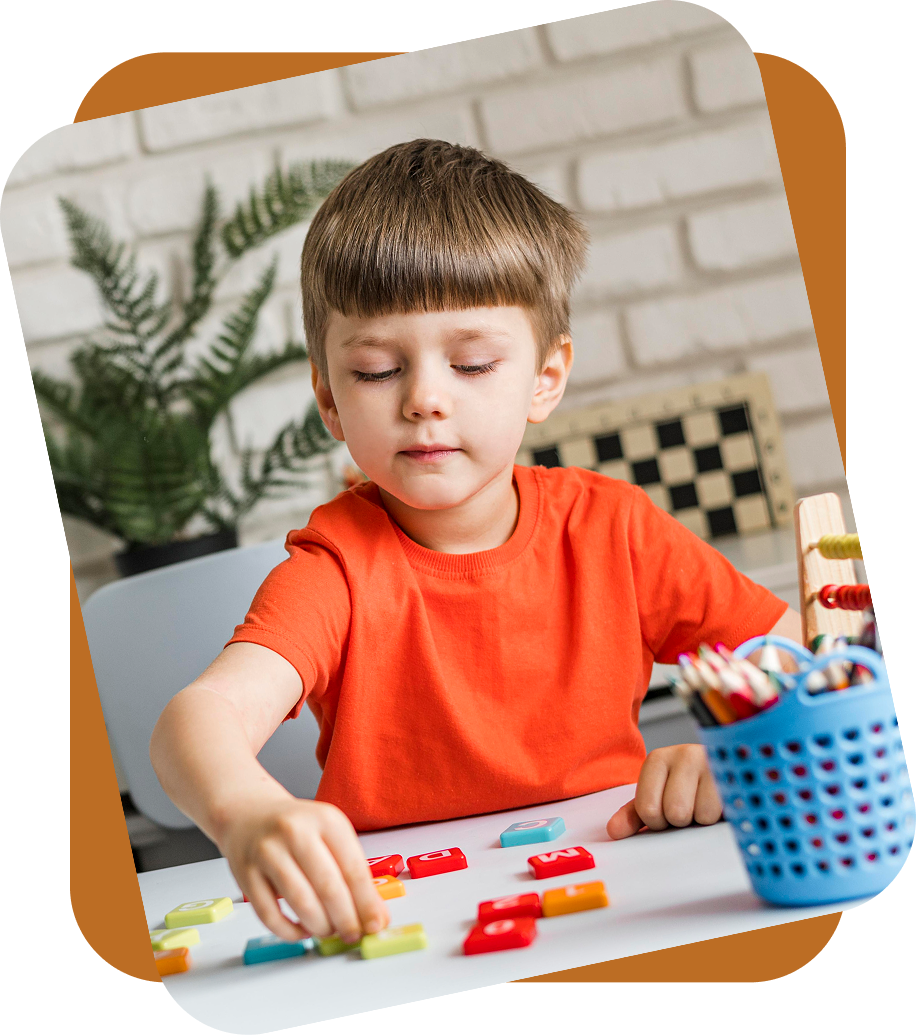
A child in an orange shirt sits at a desk, arranging colorful plastic letters on a white surface.

Let's Help Your Child Shine

Personalized ABA therapy built around your child's unique strengths and goals. Serving families in Fredericksburg & surrounding areas.

Share this article

Other articles you might like

Close-up of a young autistic boy laughing joyfully with mouth open wide outdoors after ABA therapy.
March 10, 2026
Not all autistic children are nonverbal. Learn how autism affects communication differently, from nonverbal to verbal skills, and how ABA therapy supports growth.
A young autistic boy crouching on a pavement drawing with chalk while focused on the ground.
March 10, 2026
Learn whether autism is a mental illness or a developmental disorder. Discover how autism is classified, its traits, & support options for families & educators.
Two small autistic children sitting on a bench outdoors eating ice cream cones on a sunny day.
March 10, 2026
Discover the difference between high-functioning autism & Asperger’s. Learn how diagnoses, traits, & supports vary to guide families, educators, & professionals
Common Misconceptions About Therapy | Career Based Solutions
March 10, 2026
Uncover common misconceptions about ABA therapy. Learn the facts behind evidence-based practices that support children, families, and educators effectively.
Happy autistic girl riding a scooter along a park path while smiling confidently at the camera.
March 10, 2026
Learn the best age to start ABA therapy. Discover how early intervention helps children with autism build communication, social, and independence skills.
Three autistic children hugging and giving thumbs up while standing together on a playground.
March 10, 2026
Read inspiring ABA therapy success stories. Discover how evidence-based strategies help children and families achieve lasting progress in behavior and skills.
Therapist helping an autistic boy place colorful shapes into a wooden puzzle board during therapy.
March 10, 2026
Explore ABA therapy techniques for effective behavioral intervention. Learn evidence-based strategies that improve focus, self-control, and daily functioning.
Autistic girl balancing a pencil on her upper lip while a therapist watches during ABA session.
March 10, 2026
Learn how ABA therapy supports individuals with ADHD. Discover strategies that improve focus, behavior, and daily functioning through structured interventions.
An autistic child concentrating while building colorful blocks at table near window after therapy.
March 10, 2026
Learn whether children can truly outgrow autism in Virginia. Explore expert insights on development, therapy, and lifelong support for individuals with autism.
Doctor preparing vaccine injection while mother holds autistic baby during medical appointment.
March 10, 2026
Discover what research reveals about vaccines and autism in Virginia. Review the evidence and see why experts confirm there is no scientific link between them.
Show More